Category Archives: Holistic Health

Woman over 40 in thoughtful reflection, representing a new understanding of why diets fail at midlife

Why Diets Worked in Your 30s and Stop Working in Your 40s

Suzi Jenner is a qualified hypnotherapist, counsellor and weight loss coach with 13+ years working with women 40+.

A lot of women come to me carrying the same quiet belief: that something has gone wrong with them. The things that worked before – cutting carbs, intermittent fasting, eating less and moving more – either don’t produce the same results anymore, or the results don’t hold the way they used to.

They assume they’ve become lazier, or less committed, or harder to help. None of that is true.

What’s actually changed is the landscape.

The physiological piece

Perimenopause and menopause bring hormonal shifts that genuinely change how your body responds to food, stress, and calorie restriction. Oestrogen decline affects fat distribution, particularly around the abdomen. Cortisol – the stress hormone – becomes more influential. Sleep disruption is common, and poor sleep increases hunger hormones while decreasing satiety signals. Your body is managing a genuine transition.

On top of this, years of dieting have their own cumulative effect. Each cycle of restriction and rebound can affect hunger hormones, making appetite feel more intense after periods of eating less. The body becomes increasingly efficient at protecting its weight. This is not your fault. It’s your body doing what bodies do.

The psychological piece

Here’s what’s less often talked about. By the time you’re in your 40s, you’ve likely accumulated decades of diet history. Rules you’ve followed and broken. Successes that didn’t hold. A quiet internal narrative that whispers something is wrong with you, because you’ve tried everything and nothing sticks.

That narrative lives in your subconscious. And it shapes your behaviour far more than any new eating plan can.

When restriction feels familiar and doomed, when starting a new program carries the weight of previous attempts, when part of you doesn’t fully believe it will work this time – that’s not lack of commitment. That’s a pattern running in the background, undermining every conscious effort.

Diets in your 30s may have worked partly because you hadn’t yet accumulated that history. The belief that it could work was more intact.

What actually changes the picture

The physiological piece calls for approaches that work with your body rather than against it – eating in a way that supports hormonal health, managing stress, prioritising sleep. Not starvation. Not punishing exercise. Working with your biology, not trying to override it.

The psychological piece calls for something different than another diet plan. It calls for addressing the patterns and beliefs underneath the behaviour. For understanding what food has been doing for you. For building a new internal story – not one you recite to yourself, but one that actually becomes how you see yourself.

The reason diets stop working in your 40s isn’t that you’ve failed. It’s that what worked before – white-knuckling it through restriction – was never getting to the root of it. And now the gap between what’s needed and what diets offer has become impossible to ignore.

That gap is actually useful information. It’s pointing you somewhere different.

Suzi Jenner is a weight loss coach, counsellor and hypnotherapist based in Caversham, Western Australia. She is the author of The Balanced Mind Diet and creator of Weight Freedom Mastery. coachingwithsuzi.com

Learn about the Weight Freedom Mastery program.

Woman in a calm, relaxed state representing the experience of hypnotherapy for weight loss

What Hypnotherapy Actually Does for Weight Loss (And What It Doesn’t)

Suzi Jenner is a qualified clinical hypnotherapist, counsellor and weight loss coach with 13+ years working with women 40+.

I understand the scepticism. Hypnotherapy has an image problem, mostly thanks to stage shows involving people clucking like chickens and swinging pocket watches. None of that is what clinical hypnotherapy is, and none of it is what I do.

But I also think the overclaiming in the other direction doesn’t help. Hypnotherapy is not magic. It doesn’t bypass the need for any other work. And it won’t make you lose weight while you sleep.

Here’s what it actually does.

What hypnosis is (the non-mystical version)

Hypnosis is a state of focused relaxation in which the critical, analytical part of the conscious mind quietens down. You’ve been in this state many times – absorbed in a good book, driving a familiar route on autopilot, just before you fall asleep. It’s completely natural.

In that state, it becomes easier to introduce new ideas, images, and patterns directly to the subconscious mind. The part that runs your habits, your automatic responses, and your sense of identity.

You remain fully aware and in control throughout. No one can make you do or believe anything against your will or your values. You simply become more receptive to the suggestions that align with what you’re genuinely trying to create.

What hypnotherapy can do for weight loss

Stanford University researchers using brain imaging identified specific changes that occur during hypnosis – reduced activity in the brain’s worry centre, stronger connectivity between areas involved in self-control and body awareness, and reduced self-consciousness that can get in the way of change.

In practical terms, this means hypnotherapy can help interrupt the automatic patterns around food that run below conscious awareness. Emotional eating, nighttime snacking, the craving that appears not because you’re hungry but because you’re stressed – many of these are subconscious habits that respond well to subconscious-level work.

It’s also one of the most effective tools for identity work – for genuinely embedding a new sense of who you are, rather than just thinking about it intellectually. The subconscious mind works in images and emotions. Hypnotherapy speaks that language directly.

Research published in the International Journal of Clinical and Experimental Hypnosis shows hypnosis combined with other therapeutic approaches produces meaningful, lasting weight loss results. A comprehensive 2024 meta-analysis found hypnosis highly effective for stress reduction and anxiety – both of which are central to emotional eating.

What hypnotherapy doesn’t do

It doesn’t remove the need for conscious effort, habit-building, or genuine engagement with your patterns and beliefs. It’s a tool that makes other change easier – not a replacement for it.

It also doesn’t work against your actual nature. If some part of you doesn’t genuinely want to change, hypnotherapy won’t override that. It can help align the parts of you that are running at cross-purposes. But it starts from where you actually are.

In my work, hypnotherapy sits within a broader process of coaching, inner work, and identity transformation. It’s a powerful part of the picture. Not the whole picture.

If you’ve been curious about it but put off by the performance version you’ve seen, consider what it actually is: a very deep conversation between you and your own subconscious mind. With a little help from someone who knows how to open that door.

Suzi Jenner is a qualified hypnotherapist, counsellor and weight loss coach based in Caversham, Western Australia. She is the author of The Balanced Mind Diet and creator of Weight Freedom Mastery. coachingwithsuzi.com

Curious to explore identity work? Jump to the Identity Shift Session page.

Woman over 40 sitting calmly at kitchen table, representing a different approach to weight loss

Why Willpower Doesn’t Work for Weight Loss After 40 (And What Does)

Suzi Jenner is a qualified hypnotherapist, counsellor and weight loss coach with 13+ years working with women 40+.

Picture the scene. It’s Sunday evening. You’ve planned your week, bought the groceries, decided that this time will be different. And for a day or two, it is. Then Wednesday happens. Stress at work, or a difficult conversation, or just plain exhaustion – and the plan quietly collapses.

You’ve been here before. You tell yourself you need more discipline. More commitment. A better plan.

But what if willpower isn’t the missing ingredient?

The 88% problem

Here’s something worth sitting with. Estimates suggest that around 88% of your brain activity is subconscious. That 88% controls your habits, your emotional responses, your automatic behaviours around food – and crucially, your sense of who you are.

Willpower lives in the conscious mind. That other 12%.

So when you use willpower to override the patterns running in the 88%, you’re working against the larger part of yourself. No wonder it feels like swimming upstream. No wonder it runs out.

This isn’t a character flaw. It’s simply how the mind works.

The thermostat that no one talks about

Think of your identity like a thermostat. It has a set point – a sense of who you are and what feels normal for you. When your behaviour drifts too far from that set point, the subconscious pulls you back.

So you might lose weight, feel incredible, and then slowly drift back. Not because you failed. Because your internal thermostat was still set to the old version of you.

Most weight loss programs work on your behaviour. They give you new actions to take. But if the identity set point doesn’t shift, behaviour change is temporary. You rise to your identity, not your intentions.

What actually works

Lasting change happens when the identity shifts first. When ‘I’m someone who struggles with food’ becomes genuinely – not just aspirationally – ‘I’m someone who is naturally calm and in control around food.’ Not as an affirmation. As an actual rewrite of what feels true.

That shift changes everything downstream. The food choices, the responses to stress, the relationship with your body – they all start to follow. Not because you’re forcing them. Because they’re now the natural expression of who you actually are.

The work, then, isn’t about more effort. It’s about changing what you’re working on.

Willpower is a conscious-mind tool trying to override an 88% programme. Identity change rewrites the programme itself. That’s the difference between white-knuckling it and genuinely not needing to.

Check out the Identity Shift Session, or get more information about Weight Freedom Mastery.

Suzi Jenner is a weight loss coach, counsellor and hypnotherapist based in Caversham, Western Australia. She is the author of The Balanced Mind Diet and creator of Weight Freedom Mastery. coachingwithsuzi.com

What I Shared on My Business Journey About Weight Loss That Actually Lasts

In April 2026 Abang Abu invited me onto his My Business Journey Talkshow — a show where entrepreneurs from around the world share their real journeys with a community of over 8,000 members.

We talked for nearly an hour. And while we covered a lot of ground — business mistakes, decision-making, walking on hot coals — the conversation kept circling back to the thing I care about most: why women over 40 struggle with weight loss, and what actually works when diets don’t.

Here’s the full interview if you’d like to watch it:

Below, I’ve pulled out a few of the key ideas from our conversation — the ones I think matter most if you’ve been going around in circles with food and weight.

You’re not fighting food. You’re fighting yourself.

Most women who come to me have tried everything. Keto. Paleo. Calorie counting. Mediterranean. Meal replacement shakes. Maybe a gym program that fell away when life got busy. They’ve watched friends succeed on diets that didn’t work for them, and quietly concluded they must be missing some superpower.

But here’s what I’ve learned after years of doing this work: the problem was never the diet. The problem is what’s happening underneath.

I used the iceberg metaphor in the interview because it’s the simplest way I know to explain it. Your conscious mind — the part that plans and reasons and decides “right, Monday I’m starting fresh” — is only about 12% of what’s going on. The other 88% is your subconscious mind. And if that 88% is running a story that says I’m someone who always fails at this, then no meal plan in the world is going to hold.

You’re trying to override 88% with 12%. The maths just doesn’t work.

Identity before behaviour

This is where the real work begins. Instead of starting with what you eat, we start with who you’re becoming.

BE .... DO .... HAVE

I talked in the interview about the principle of Be, Do, Have — something I learned years ago in personal development that completely changed how I approach everything. Most people try to do things in order to have things. Lose weight to feel confident. Get the body to feel worthy. But it works the other way around. You have to be first. The doing and the having follow.

In weight loss, that means getting your identity aligned before you change a single meal. Who do you want to become? What does she look like, feel like, decide like? When that vision is clear and your subconscious mind is on the same page as your conscious mind, the behaviour follows naturally. You’re not white-knuckling it anymore. You’re just acting like the person you’ve already started to become.

Small changes. Genuinely small.

One thing I was clear about in the conversation is that the subconscious mind doesn’t like big, sudden changes. It resists them. That’s why most diets trigger an internal rebellion — you’re asking your whole system to overhaul overnight, and the 88% pushes back hard.

So we go small. Tiny habits that are so simple they don’t trigger resistance. I call them “magic” habits. Every time you follow through on one of those small habits, you’re proving something to yourself: I’m the kind of person who can do this. That proof builds. It compounds. And over time, it rewrites the identity story from the inside out.

Sally’s story

I shared Sally’s story in the interview because it’s one of the clearest examples I have of what this looks like in practice.

Sally came to me after years of yo-yo dieting and self-sabotage. She knew she was doing it — starting a diet, making progress, then destroying it — but she couldn’t stop the pattern. Each cycle eroded her trust in herself a little more. By the time she reached me, she had a deeply embedded identity of failure around food.

We didn’t start with what she was eating. We started with connecting her to her future self — the version of her who’d already crossed the bridge. We turned down the volume on her inner critic and embedded an inner coach to counter it. Then she began making small changes, building proof on a daily basis that she could trust herself again.

In eight weeks, she’d lost 18 pounds. She told me she did it without even really trying.

And then she said something I’ll never forget: “As I become more aligned to my true self, it feels like I’m coming home to me.”

That’s the work. Not calories. Not willpower. Coming home to yourself.

Why I’m going full out at 69

Abang Abu asked me whether I’d ever felt like giving up. I have. Especially in the early days when the marketing wasn’t landing and new clients weren’t coming through the door.

But here’s what keeps me going: I believe each of us has gifts we’re meant to use during our lifetime. And the worst thing I can imagine is getting to the end of mine and feeling like I played small. Like I hid instead of putting myself out there.

I’m turning 70 this year. I retired last year — for the second time — and I thought, this is it. This is my window. I see a clear ten years ahead of me where I can still do this work at the highest level. I want to go full out and give it everything I’ve got. Help as many women as I can. Build something I’m proud of.

Because there’s a saying that the most expensive real estate in the world is the graveyard — full of dreams that never saw the light. I don’t want mine to be one of them.

If this resonates with you

If you’ve been going around in circles with diets and wondering what’s actually going on underneath — I write about this every week. Not theory. Not meal plans. The real stuff: identity, habits, the mental game, and what it looks like when women start trusting themselves again.

Sign up for my free weekly insights HERE

And if you know someone who needs to hear this — a friend, a sister, a colleague who’s been blaming herself for not having enough willpower — please share this with her. There’s nothing wrong with her. She just hasn’t found the right approach yet.


Thank you to Abang Abu for the generous invitation and for creating such a warm space to have this conversation. If you’re interested in business and entrepreneurship, his My Business Journey Talkshow is well worth exploring.

Suzi Jenner is a weight loss coach, counsellor and hypnotherapist based in Caversham, Western Australia. She is the author of The Balanced Mind Diet and creator of Weight Freedom Mastery. coachingwithsuzi.com


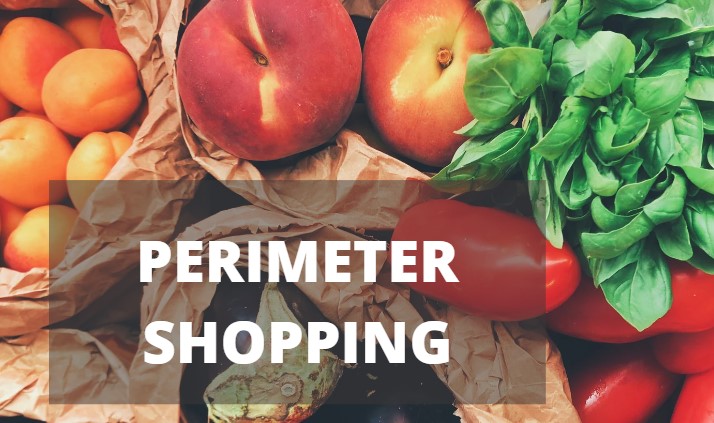
Perimeter Shopping

Have you heard the term Perimeter Shopping? It means shopping around the border or outer edges of the supermarket. This is generally where you find the fruit and vegetables, dairy, meat, eggs, seafood. These items are easily recognisable as food, they are in their natural form and no labels are required to explain them.

The general idea is to stay away from the centre isles of the supermarket, because that is where you find all the highly processed foods with little nutritional value and lots of additives. We all know these things are addictive, mess up our metabolism, rob us of energy, and are making us fat.

Many of the things in the middle aisles are not easily recognisable as food – they are in packages, boxes, bottles and tins. We need to read the labels to know exactly what is in them. Warning: you won’t like what you read. Watch out for the terms “low fat”, “low sugar” and “added calcium”. These are trade-offs. Low fat items are often loaded with sugar or salt to make up for the reduction in fat. Low salt is often loaded with sugar and fat. When they splash the phrase, “added calcium” on the front, that’s often a signal that the product is loaded with all three.

There are some items located in the perimeter that are not good buys: pre-marinated meats (have you looked at their ingredients list?), flavoured milks and sugar-added yoghurts, packets and bottles of sauces and flavourings to which you “just add meat” for an instant meal, and salad dressings. For good health you want to eat natural food in preference to these sorts of processed items.

You pay for the convenience of pre-prepared and packaged foods in two ways – they cost more money to buy and they cost you your health. We know we need high quality fuel to get the best performance from a racing car. Similarly our body will only be in peak condition when we feed it the highest quality food.

Your health is your real wealth. It is worth investing in. You deserve the best.

Where is your lifestyle taking you?

Maintaining our health to live long and well depends on simple lifestyle choices we make every day, often unconsciously.

To identify how long and how well you’re going to live, the National Institute on Ageing (NIA) asks questions such as:

• Do you sleep 7.5 hours/night on average?
• Do you exercise for 30 minutes/day?
• Do you eat mostly whole foods?
• Do you have friends (at least 3) that you can call and that actually care?
• Do you have a sense of purpose that you can write down that gives meaning to your life?
• Are you a non-smoker?

If you can say yes to all these questions, they tend to predict that you’ll live healthy until 90 years old on average.

As you say no to some of them your lifespan starts to decrease.

Time and again we see the basics play a major role in our lives. Simple choices we make every day but seldom think about. Habits that run on autopilot but do not support our health and wellness.

Unfortunately the bulk of western medicine is centred around treatment of disease. We don’t pay a doctor to keep us well. We pay the doctor to treat us when we are sick. The cure frequently involves taking some kind of medication. Education about lifestyle changes to return is to health is not often provided.

What if we placed more focus on maintaining our health, instead of fixing disease when it turns up?

If you want to learn how to make some simple changes to support your health and wellness and think a holistic approach would work for you, check out my pages on WEmind – https://wemind.com.au/suzi-jenner/.

DO YOU KNOW WHAT’S RIGHT FOR YOU?

What if you activated your own inner doctor? Knowing ourselves and our bodies, knowing what makes us feel well, alive and vital lets us tailor a lifestyle uniquely suited to us as individuals.

I am a big believer in this. There is no one size fits all. We all have a different genetic makeup, different environmental influences, different history of body and mind stressing events.

When it comes to weight loss I think everyone can find their way in terms of choosing a way of eating that will work for them. There is no one right way.

It is the same with our health and wellness. When we want to experience more energy and vitality as we get older, we need to discover how to tweak the various levers that will get us feeling invigorated, vibrant and joyful.

I believe we all have an inner power, intuition, insight and understanding about ourselves. We can find a lifestyle that supports our inner power, allows us to release that inner power and protects us from inadvertently harming ourselves through choices that don’t propel us towards our end goal.

Do you know what is right for you? Yes, you do. It is just a matter of having some guidance, information, prompting to help you tap into that innate inner power. You may need to address some bad habits, limiting beliefs, inaccurate or outdated information.

HoloBody (short for holistic body) can help. The approach is always respectful of your uniqueness and your own inner wisdom. You are supported and encouraged to be self-directed about supercharging your wellness.

It’s like the old adage: “If you give a man a fish, you feed him for a day. If you teach a man to fish, you feed him for a lifetime.” HoloBody produces a life change that is lasting, because you develop this ability to tune into your inner wisdom and be self directed.

For more information, check out my pages on WEmind – https://wemind.com.au/suzi-jenner/

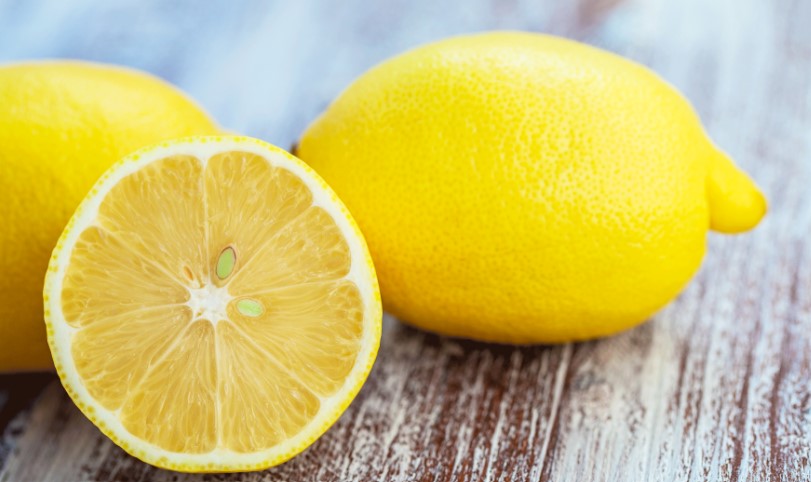
Drinking Warm Lemon Water in the morning

Personal sharing – this is one of my morning rituals. Every morning when I get up the first thing I do is drink one litre of slightly warm water with the juice of one lemon added. This is not a new fad, I have done this for many years.

Why do I do it?

What you put into your body first thing is important. You have just been fasting all night. Hydrating is a good first step.

We all know we are supposed to drink more water. I struggle to get my water intake throughout the day, and a litre first thing in the morning gives me a head start. Sometimes I drink another litre of sparkling mineral water in the evening, and those two things together are a big plus in the hydration department. Adding lots of sips as I move throughout the day is also important.

Why add lemon to my morning glass of water? It tastes better than drinking plain water. It gives me some extra vitamin C which helps my immune system and I get a nice clean and clear feeling in my body.

A glass (150ml) of lemon water with the juice of one lemon provides approximately:
• 4Kcal / 16KJ
• 0.1 g Protein
• 0.8 g Carbohydrate
• 65 mg Potassium
• 18 mg Vitamin C

Other benefits to consider:
Aids in weight management: Drinking water can aid in weight management by supporting hydration, boosting energy and helping to regulate metabolism and digestion. Drinking water before a meal also curbs the appetite. It doesn’t have to be lemon water, but if the lemon flavour encourages you to drink more water, that is a plus.
Improves your skin: Lemons, like other citrus fruits, are high in vitamin C, which is essential for the production of collagen. Collagen is responsible for the elasticity and strength of the skin. According to research vitamin C is also a powerful antioxidant that neutralises free radicals present in the skin that build up from air pollution and ultraviolet radiation. The juice of one whole lemon delivers between 20 to 25% of your daily value of vitamin C.
Helps digestion: Drinking your lemon water warm “can loosen things up,”. Many people report that warm liquids help stimulate digestion and gets things moving.

And here’s a helpful tip:
The acid in lemons may be a problem for teeth. Lemons contain citric acid, and too much acid can wear away tooth enamel. So I drink my morning lemon water with a straw.

Why not try it and see how you feel?

Know what to do, but can’t make yourself do it?

You are not alone. This is a common problem for people who are trying to lose weight. You probably are really hard on yourself. You think you are weak or lazy. But that is not true.

The fact is that there is a wealth of knowledge out there on the internet. Lots of information about anything you want to know how to do. When it comes to weight loss, there are many different approaches that work when implemented:

  • Keto
  • Carnivore
  • Vegan
  • Calorie counting
  • Low carb

All of these have their pluses and minuses. I personally favour keto, but it is not the only or best approach, nor is it an approach that suits everyone. I personally can’t stand calorie counting – that would drive me to distraction – but it works for some people.

The problem is not usually with knowing what to do.

The problem is usually that you can’t make yourself do it (oh – no – that’s it, isn’t it?).

The solution does not lie in accountability to keep you on track with your plan. This sometimes helps, and may be effective in the short term. You join a program or hire a coach. It helps. But it is not a pathway to long term success.

If you want to make a lasting change it needs to be a lifestyle change. Otherwise it is difficult to implement and even harder to sustain over the long term.

HoloBody is a holistic approach that uses techniques such as MCII (Mental Contrasting with Implementation Intentions) to drive action. MCII is a scientific method that creates implementation intention.

HoloBody (holo being short for holistic) addresses more than diet and exercise. It is about more than weight loss – it is a pathway to your total wellness. It is a journey to being the best version of yourself. And with HoloBody you will find you CAN experience success that lasts.

For more information, check out my pages on WEmind – https://wemind.com.au/suzi-jenner/

Be, Do, Have

When we try to shape behaviours we usually do it around the outcome we want. We focus on the end result, on what we want to HAVE and work backwards. I want to weigh x kilos, therefore I must do y and z.

But if this goes against the grain of who you are (your BEing), it can be hard to sustain the DOing. This is a recipe for initiating new behaviours that you can’t make stick. The new behaviours are only temporary changes that seem difficult and cannot be sustained over the long term. You never get to HAVE the outcome you want.

Here’s a tip to make things easier. Start with BEing.

Ask: Who do I need to BE? Who is the type of person that gets the outcome I want? If I want to lose weight, what would a person who is losing weight do?

Take action with a focus on your identity (who you are BEing) rather than your outcome (what you want to Have). This creates a self-improvement feedback loop. You identify the kind of person need to BE. You start with one behaviour that kind of person does. The more you DO that behaviour, the more you reinforce the belief that you are BEing the kind of person that gets the result you want. Magic!

For example, a person who is losing weight plans in advance what they eat so they can choose foods that fuel their body rather than eating whatever is on hand or most emotionally satisfying.

You begin to plan your meals in advance.

Now you are BEing the person who is DOing the things that result in your desired outcome.

You have created a spiral. The more you DO the thing, the more you come to believe you are BEing the kind of person who gets the outcome you want. Doing the thing gets easier and easier. The behaviours become integrated and automatic.

Every action you take is a vote for the type of person you wish to BEcome.
It eventually becomes a part of who you are.

Way to go!!

If you want to change who you are BEing, check out my pages on WEmind – https://wemind.com.au/suzi-jenner/