Tag Archives: identity

Pathway representing the difference between behaviour change and identity change for lasting weight loss

Behaviour Change vs Identity Change: Why One Lasts and One Doesn’t

Suzi Jenner is a qualified hypnotherapist, counsellor and weight loss coach with 13+ years working with women 40+.

Most weight loss programs are behaviour change programs. They give you new actions to take: eat these foods, not those, at these times, in these quantities. Exercise in this way. Track this. Avoid that.

Behaviour change isn’t wrong. Behaviour is ultimately where change shows up in the world. The problem is that behaviour change without identity change tends not to hold.

Here’s why.

The identity set point

Your identity is like a thermostat. It has a set point – a deeply held sense of who you are, what feels normal, what you ‘always do.’ When your behaviour drifts too far from that set point, your system pulls you back.

So you go on a diet. You change your behaviour. You lose weight. You feel good. And then, gradually or suddenly, you return to your previous patterns. Not because you failed. Because your thermostat – your identity set point – was still set to the version of you that struggles with weight.

Your subconscious is loyal to your identity. It will always act to confirm what you believe about yourself.

What identity change actually is

Identity change isn’t an affirmation you repeat to yourself in the mirror. It’s a genuine shift in what you believe to be true about who you are.

A 2025 study in Behavioural Sciences found that identity predicted behaviour even after accounting for motivation and habit. In other words, who you believe yourself to be has more pull on your actions than how motivated you are or how long you’ve been doing something.

When your identity shifts from ‘I’m someone who struggles with food’ to ‘I’m someone who is naturally calm and in control around food,’ your behaviour follows from a different place. Not from effort and willpower. From a sense of self. From what feels natural.

That’s the difference between white-knuckling your way through a diet and genuinely not thinking much about it.

How identity change actually happens

It’s not one dramatic moment. It’s built from the inside out, over time, through three things working together.

Anchors – the personal standards you set for yourself that reflect who you’re becoming. Not rules imposed from outside. Chosen commitments that feel like expressions of who you are.

Courage reps – small acts of doing the new thing before it feels easy. Every time you respond to a craving differently, every time you eat in a way that reflects the person you’re becoming, you’re sending your subconscious a signal: this is who I am now.

Evidence – the accumulation of experience that shows you, concretely, that you’re different now. Not just thinking it. Living it. That evidence reshapes the identity set point from the inside.

The sequence matters. Identity doesn’t follow behaviour automatically. But identity and behaviour working together, over time, creates change that doesn’t need constant effort to maintain.

Behaviour change asks: what do you need to do differently? Identity change asks: who are you becoming? The second question has a longer reach.

Learn about the Weight Freedom Mastery program.

Suzi Jenner is a weight loss coach, counsellor and hypnotherapist based in Caversham, Western Australia. She is the author of The Balanced Mind Diet and creator of Weight Freedom Mastery. coachingwithsuzi.com

Woman over 40 in thoughtful reflection, representing a new understanding of why diets fail at midlife

Why Diets Worked in Your 30s and Stop Working in Your 40s

Suzi Jenner is a qualified hypnotherapist, counsellor and weight loss coach with 13+ years working with women 40+.

A lot of women come to me carrying the same quiet belief: that something has gone wrong with them. The things that worked before – cutting carbs, intermittent fasting, eating less and moving more – either don’t produce the same results anymore, or the results don’t hold the way they used to.

They assume they’ve become lazier, or less committed, or harder to help. None of that is true.

What’s actually changed is the landscape.

The physiological piece

Perimenopause and menopause bring hormonal shifts that genuinely change how your body responds to food, stress, and calorie restriction. Oestrogen decline affects fat distribution, particularly around the abdomen. Cortisol – the stress hormone – becomes more influential. Sleep disruption is common, and poor sleep increases hunger hormones while decreasing satiety signals. Your body is managing a genuine transition.

On top of this, years of dieting have their own cumulative effect. Each cycle of restriction and rebound can affect hunger hormones, making appetite feel more intense after periods of eating less. The body becomes increasingly efficient at protecting its weight. This is not your fault. It’s your body doing what bodies do.

The psychological piece

Here’s what’s less often talked about. By the time you’re in your 40s, you’ve likely accumulated decades of diet history. Rules you’ve followed and broken. Successes that didn’t hold. A quiet internal narrative that whispers something is wrong with you, because you’ve tried everything and nothing sticks.

That narrative lives in your subconscious. And it shapes your behaviour far more than any new eating plan can.

When restriction feels familiar and doomed, when starting a new program carries the weight of previous attempts, when part of you doesn’t fully believe it will work this time – that’s not lack of commitment. That’s a pattern running in the background, undermining every conscious effort.

Diets in your 30s may have worked partly because you hadn’t yet accumulated that history. The belief that it could work was more intact.

What actually changes the picture

The physiological piece calls for approaches that work with your body rather than against it – eating in a way that supports hormonal health, managing stress, prioritising sleep. Not starvation. Not punishing exercise. Working with your biology, not trying to override it.

The psychological piece calls for something different than another diet plan. It calls for addressing the patterns and beliefs underneath the behaviour. For understanding what food has been doing for you. For building a new internal story – not one you recite to yourself, but one that actually becomes how you see yourself.

The reason diets stop working in your 40s isn’t that you’ve failed. It’s that what worked before – white-knuckling it through restriction – was never getting to the root of it. And now the gap between what’s needed and what diets offer has become impossible to ignore.

That gap is actually useful information. It’s pointing you somewhere different.

Suzi Jenner is a weight loss coach, counsellor and hypnotherapist based in Caversham, Western Australia. She is the author of The Balanced Mind Diet and creator of Weight Freedom Mastery. coachingwithsuzi.com

Learn about the Weight Freedom Mastery program.

What 'Changing Your Relationship with Food' Actually Means

What ‘Changing Your Relationship with Food’ Actually Means

Suzi Jenner is a qualified hypnotherapist, counsellor and weight loss coach with 13+ years working with women 40+.

It’s one of the most-used phrases in wellness. Every coach says it. Every program promises it. But rarely does anyone stop to explain what it actually means in practice – what changes, what it looks and feels like from the inside, and why it matters more than any eating plan.

Let’s be specific.

What a troubled relationship with food actually looks like

It’s not usually dramatic. For most women it’s a constant low-level hum. Planning tomorrow’s lunch while still eating breakfast. Calculating whether the afternoon snack was ‘good’ or ‘bad’. Feeling guilty after a meal out, then vowing to compensate tomorrow. Eating perfectly all day and then losing control at 8pm and not knowing why.

It’s the mental load that runs in the background, eating up bandwidth that belongs to other things.

At its root, a troubled relationship with food is a relationship with control. Food becomes the thing you measure yourself against. Eat well, feel good about yourself. Eat badly, feel like you’ve failed. The food isn’t the real problem. The way you’re using it to judge your worth is.

What a good relationship with food actually looks like

Food becomes largely neutral. You notice hunger. You eat. You notice fullness. You stop. You choose foods that feel good in your body without needing a set of rules to do it. You can eat a piece of cake at a birthday party and it doesn’t set off three days of mental negotiation.

Most importantly: you trust yourself. Not because you’ve become perfectly disciplined, but because you’ve built a genuine connection to your own body’s signals. Your body has wisdom. A good relationship with food means you’ve learned to hear it.

The constant mental chatter – sometimes called food noise – quietens. Not because you’re suppressing it, but because the source of it has shifted.

Why this matters more than any eating plan

Here’s what’s interesting. When the relationship with food shifts, eating choices tend to improve naturally – not because you’re following rules, but because you actually want to eat in a way that makes you feel well.

The irony is that most diet programs give you a new set of rules to follow and call that a changed relationship. But following rules is the opposite of a genuine relationship. Rules are external. A relationship is internal.

The work of actually changing your relationship with food is inner work. It involves understanding what food has been doing for you emotionally, building other ways to meet those needs, reconnecting with your body’s intelligence, and gradually rebuilding self-trust.

It’s slower than a diet plan. It’s also the thing that actually holds.

Suzi Jenner is a weight loss coach, counsellor and hypnotherapist based in Caversham, Western Australia. She is the author of The Balanced Mind Diet and creator of Weight Freedom Mastery. coachingwithsuzi.com

Learn about the Weight Freedom Mastery program.

Woman over 40 sitting calmly at kitchen table, representing a different approach to weight loss

Why Willpower Doesn’t Work for Weight Loss After 40 (And What Does)

Suzi Jenner is a qualified hypnotherapist, counsellor and weight loss coach with 13+ years working with women 40+.

Picture the scene. It’s Sunday evening. You’ve planned your week, bought the groceries, decided that this time will be different. And for a day or two, it is. Then Wednesday happens. Stress at work, or a difficult conversation, or just plain exhaustion – and the plan quietly collapses.

You’ve been here before. You tell yourself you need more discipline. More commitment. A better plan.

But what if willpower isn’t the missing ingredient?

The 88% problem

Here’s something worth sitting with. Estimates suggest that around 88% of your brain activity is subconscious. That 88% controls your habits, your emotional responses, your automatic behaviours around food – and crucially, your sense of who you are.

Willpower lives in the conscious mind. That other 12%.

So when you use willpower to override the patterns running in the 88%, you’re working against the larger part of yourself. No wonder it feels like swimming upstream. No wonder it runs out.

This isn’t a character flaw. It’s simply how the mind works.

The thermostat that no one talks about

Think of your identity like a thermostat. It has a set point – a sense of who you are and what feels normal for you. When your behaviour drifts too far from that set point, the subconscious pulls you back.

So you might lose weight, feel incredible, and then slowly drift back. Not because you failed. Because your internal thermostat was still set to the old version of you.

Most weight loss programs work on your behaviour. They give you new actions to take. But if the identity set point doesn’t shift, behaviour change is temporary. You rise to your identity, not your intentions.

What actually works

Lasting change happens when the identity shifts first. When ‘I’m someone who struggles with food’ becomes genuinely – not just aspirationally – ‘I’m someone who is naturally calm and in control around food.’ Not as an affirmation. As an actual rewrite of what feels true.

That shift changes everything downstream. The food choices, the responses to stress, the relationship with your body – they all start to follow. Not because you’re forcing them. Because they’re now the natural expression of who you actually are.

The work, then, isn’t about more effort. It’s about changing what you’re working on.

Willpower is a conscious-mind tool trying to override an 88% programme. Identity change rewrites the programme itself. That’s the difference between white-knuckling it and genuinely not needing to.

Check out the Identity Shift Session, or get more information about Weight Freedom Mastery.

Suzi Jenner is a weight loss coach, counsellor and hypnotherapist based in Caversham, Western Australia. She is the author of The Balanced Mind Diet and creator of Weight Freedom Mastery. coachingwithsuzi.com

Test: GLP-1s - Yes or No

My Honest Take on GLP-1 Medications: No Judgement, Just Real Talk

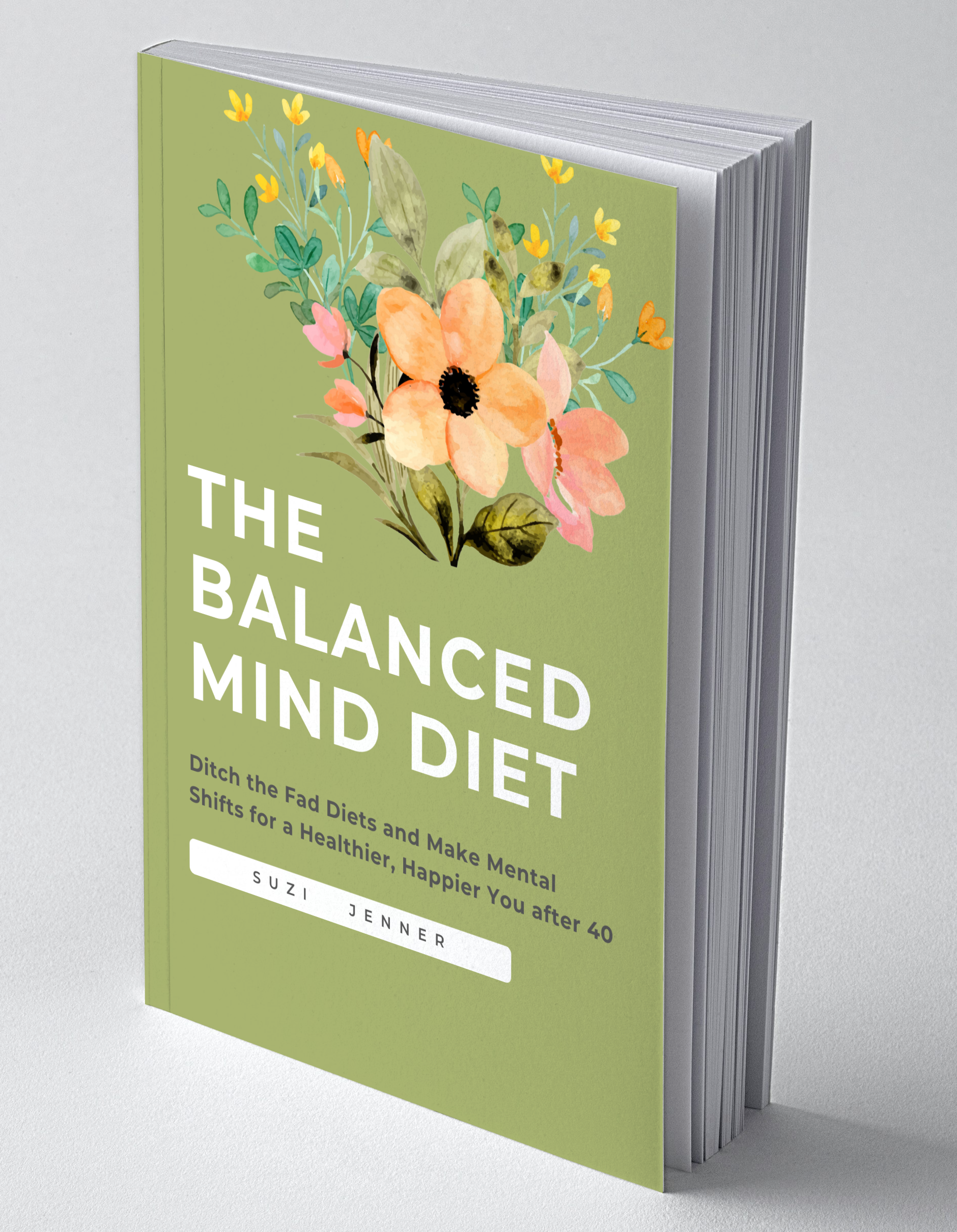
Let me start by saying this: I don’t support diet culture. Diets don’t work. That’s the foundational premise of my micro book, The Balanced Mind Diet, and it’s what I teach in my Weight Freedom Mastery program.

I believe weight loss is more about the mental game than anything else. It’s about transforming your identity – seeing yourself as someone who maintains their ideal weight with ease and freedom, and then taking action as that person right now.

In my program, there are no strict dietary guidelines. Just a recommendation to eat whole, natural foods. We use a variety of tools and techniques to embed permanent changes that produce lasting weight loss.

And importantly – this program is strategic. It’s not about rapid weight loss.

For some people, the weight comes off quickly and easily. They love how natural it feels. For others, it takes longer. It depends on many factors: how much weight you have to lose, your hormones, your stress levels, your relationship with food.

You might experience:

  • Slower metabolism and increased fat retention
  • Muscle loss and worse body composition
  • Long-term rebounding with faster weight regain
  • No change to lifestyle or habitual behaviour patterns
  • Continuation of intense cravings with their cycle of shame and guilt.

If you want to keep your energy up, feel strong and fit, look toned, be as healthy as possible, and (most importantly) sustain your results – you can’t just focus on barely eating and watching the scale drop as fast as possible.

That’s doing yourself a huge disservice, both now and for years to come.

So where do GLP-1 medications fit into all of this?

GLP-1 MEDICATIONS WORK
(AND THAT’S A GOOD THING)

Let me be clear that I am providing my opinion here as a weight loss coach. I am not a medical practitioner or dietician, and I am in no way providing medical advice.

My first thought when I see someone using Ozempic, Wegovy, or another GLP-1 medication for weight loss?

It works. Generally. (I have had one Australian client who found it didn’t work for her.)

And for people who are morbidly obese and have tried everything without success, these medications can be life-changing.

Losing the weight gives you a whole new experience in life:

  • You look better
  • You have more energy
  • You can indulge in a whole new wardrobe
  • You enjoy the positive response from people around you

But more importantly, you gain metabolic health.

Metabolic health should be a high priority, because when it’s poor, it opens you up to a whole range of diseases:

  • Type 2 diabetes
  • Cardiovascular disease
  • Fatty liver disease
  • Sleep apnoea
  • Certain cancers

So yes, avoiding that trajectory is a very good idea.

WHAT ABOUT THE SIDE EFFECTS?

It varies from person to person, but side effects can include:

  • Nausea, vomiting, diarrhea, constipation
  • Potential muscle loss if not managed properly
  • Rare but serious risks like pancreatitis and thyroid issues

Here’s my perspective: In many cases, the risks associated with continuing to carry too much body fat are greater than the risks of taking GLP-1 medications under medical supervision.

And many of the issues people attribute to GLP-1s happen ANY time someone loses a significant amount of weight quickly – with or without medication.

Fast weight loss without a solid strategy leads to all the problems I mentioned earlier: hunger, low energy, muscle loss, and rebounding.

WHAT OTHER DOWNSIDES ARE THERE?

1. Many people gain weight back quickly after stopping the medication.

But again, that happens even without GLP-1s. When people go back to their old habits after losing weight (no matter how they lost it), the weight comes back. It’s the well-known yo-yo dieting cycle, and it wreaks havoc on your metabolism.

2. Relying exclusively on GLP-1s and making no other changes is a massive, common mistake.

No strength training. Not learning how to eat in a way that will sustain long-term results. Not dealing with behavior patterns or addressing cravings.

People do the same thing with extreme diets – thinking the tool will do all the work, rather than using the tool to build a better life.

THE BIGGEST DISADVANTAGE: WHAT HAPPENS WHEN YOU STOP

GLP-1 medications work by greatly reducing appetite. The desire to overeat disappears. Food becomes a non-issue.

Which is wonderful – until you stop taking the drug.

People describe it as “falling off a cliff.” The hunger and cravings come roaring back with a vengeance.

And since you haven’t made any lifestyle or behavioral changes, you’re right back to square one in the weight loss battle.

ONE ALTERNATIVE: STAY ON THE MEDICATION LONG-TERM

We don’t know a lot yet about the long-term effects of GLP-1 medications. But here’s what we do know:
👉 In Australia, GLP-1s are expensive. In the US Trump RX will enable consumers to purchase at discounted prices.
👉 It is likely the drugs will become less stigmatized, cheaper, and more effective over time.
👉 I wouldn’t be surprised if a large percentage of people are on at least a low dose of a GLP-1 in the next 3-5 years. Maybe slightly longer.

And honestly? I understand what motivates that. As long as people are also doing the deeper work – building strength, eating quality food, and addressing the mental and emotional patterns that drove the weight gain in the first place.

WHAT SHOULD WE FOCUS ON?

As more and more people take these medications, I believe we’ll shift our focus to:

1. Food quality, not just quantity

Since GLP-1s help people manage calories more easily, we can prioritize what we eat – nutrient density, whole foods, gut health – not just how little we can get away with eating.

2. Muscle retention and body composition

Not just losing weight as quickly as possible, but building and maintaining muscle, looking toned and strong, and supporting long-term metabolic health.

3. Sustainable habits and long-term health

Creating a lifestyle you can maintain for decades, not just until you hit a goal weight.

WEIGHT FREEDOM MASTERY IS THE PERFECT COMPLEMENT TO GLP-1s

My Weight Freedom Mastery program is designed to help you:

✅ Make sustainable lifestyle changes while the medication manages your appetite
✅ Do the deeper mental work that addresses why you overeat, emotionally eat, or struggle with food in the first place
✅ Transform your identity so that when you stop the medication (or continue on a maintenance dose), you don’t experience that “falling off a cliff” feeling

If you still see yourself as “someone who struggles with weight,” you’ll keep struggling – medication or not.

But if you use this window (while your appetite is suppressed) to rewire your brain, shift your identity, and build new habits, you set yourself up for permanent, effortless weight maintenance.

MY CORE BELIEF: NO SHAME, NO JUDGEMENT

One of the core mantras in Weight Freedom Mastery is this: There should be no shame. You don’t deserve it, and it doesn’t serve you.

I advocate for self-autonomy and authority over your own life. You know yourself best.

So if your decision in partnership with your doctor is to use GLP-1 medications, you’ll find no judgement here.

I’ll rejoice with you when you achieve your goal and improve your metabolic health.

And I’d love to help you make the changes that ensure you become the kind of person who maintains their ideal weight with ease and freedom – for life.

The sooner you start that journey, the better.

If you begin while you’re taking the medication, there will be no falling off a cliff when you stop. Or if you decide to continue with a long-term dose, you can use your gains to advantage by taking care of your metabolic health and building a great foundation for continued success.

QUESTIONS or COMMENTS?

If you have an experience with GLP-1s you’d like to share, I’d love to hear about it. If there’s something I didn’t address here, I’m happy to answer any questions – just email me at suzi@coachingwithsuzi.com.

Ready to Make Your Weight Loss Permanent?

Whether you’re using GLP-1 medications or not, the mental game is what makes weight loss last.

If you’re ready to stop thinking about food 24/7, end emotional eating, and finally maintain your ideal weight with ease and freedom – let’s talk. 😊

Book time for a free chat – here’s my calendar

Learn More About Weight Freedom Mastery


About Coach Suzi

Suzi Jenner is a weight loss coach, qualified counsellor and hypnotherapist and author of The Balanced Mind Diet. She specializes in helping women over 40 break free from food obsession and achieve lasting weight loss through identity transformation. Her Weight Freedom Mastery program focuses on the mental game of weight loss – no diets, no shame, just sustainable freedom. 📧 suzi@coachingwithsuzi.com


Stop Bouncing from Fad Diet to Fad Diet

Unlock A New You With The Balanced Mind Diet Instead

Are you tired of…
❌ Starting a new diet every month, only to give up weeks later?
❌ Feeling guilty every time you eat something “off-limits”?
❌ Exhausting your willpower just to make it through the day without bingeing?
❌ Watching the scale go up and down like a yo-yo?
❌ Feeling like you’re at war with your own body and mind?

If you’re nodding along, you’re not alone. Millions of women in their 40s and 50s are stuck in this frustrating cycle. A study followed 14 Biggest Loser contestants for six years after the show and all but one regained weight. Four became heavier than when they started the show. But your story can be different.

There is another way. This is why I wrote the Balanced Mind Diet micro book.

How is this different from other books you’ve tried?

This book has no dietary guidelines, no exercise plans. It does not recommend any particular way of eating, and it does not promote or sell any pills, supplements or meal replacement shakes. What it delivers is a revelation about what has really been derailing your weight loss efforts and concrete steps you can take to produce lasting weight loss.

This isn’t another fad diet or quick fix. Because the truth is that diets don’t work.

With the Balanced Mind Diet, you’ll experience:
✅ Freedom from relying on sheer willpower
✅ No more forbidden foods or extreme restrictions
✅ An end to complicated calorie counting and point systems
✅ No need for expensive supplements or special foods

Most fad diets feel like a chore, and even if you do lose weight, you often put it back on – with interest – later down the road.

Right now, you might be:
👎 Jumping from one crazy diet to another with no lasting results
👎 Battling relentless food cravings that derail your weight loss plans
👎 Watching the scale creep up despite your best efforts
👎 Struggling to keep up with a busy life, feeling overwhelmed and out of control.

But after using the Balanced Mind Diet to transform your mind AND your body, your life will look very different:
👉 Enjoy a balanced, healthy relationship with food, feeling satisfied and nourished without deprivation
👉 Feel energized and confident, effortlessly maintaining a healthy weight without gruelling workouts
👉 Experience a clear, focused mind, free from constant stress and anxiety about your weight

Imagine a life full of joy, confidence, and freedom – without the endless cycle of weight loss-weight gain, weight loss-weight gain.

With the Balanced Mind Diet, you’ll wave goodbye to
❌ Restrictive diets that leave you hungry and miserable
❌ Exhausting workouts that yield no results
❌ Endless calorie counting and food anxiety
❌ Emotional eating and guilt-ridden binges
❌ Low energy and lack of motivation

For just $3, this transformative micro book will show you
* How to align your conscious desires with your subconscious beliefs
* How to transform your self-identity to match your weight loss aspirations
* How to implement small, consistent changes that lead to lasting results

The Balanced Mind Diet is ALL you need for lasting weight loss, renewed energy, and true confidence.

You may be wondering: Is this really going to work for me?
The answer is, it depends. Reading the book won’t change anything, because knowledge without action is useless. However, if you implement the concepts from the book it will produce a transformation in your thinking, your actions and your outcomes.

Don’t let another day pass feeling frustrated and defeated.

Click here to order your copy now.

My guarantee ….
If you feel like you didn’t get value from the book, just email suzi@bmdbook.com and I’ll send you a full refund for your book purchase. I don’t care what the reason is, if you’re not happy then neither am I, and your $3 will be sent back to you and you keep the book. Simple as that. This is a one-full-year money back guarantee.

Suzi Jenner is a weight loss coach, counsellor and hypnotherapist based in Caversham, Western Australia. She is the author of The Balanced Mind Diet and creator of Weight Freedom Mastery. coachingwithsuzi.com

Be, Do, Have

When we try to shape behaviours we usually do it around the outcome we want. We focus on the end result, on what we want to HAVE and work backwards. I want to weigh x kilos, therefore I must do y and z.

But if this goes against the grain of who you are (your BEing), it can be hard to sustain the DOing. This is a recipe for initiating new behaviours that you can’t make stick. The new behaviours are only temporary changes that seem difficult and cannot be sustained over the long term. You never get to HAVE the outcome you want.

Here’s a tip to make things easier. Start with BEing.

Ask: Who do I need to BE? Who is the type of person that gets the outcome I want? If I want to lose weight, what would a person who is losing weight do?

Take action with a focus on your identity (who you are BEing) rather than your outcome (what you want to Have). This creates a self-improvement feedback loop. You identify the kind of person need to BE. You start with one behaviour that kind of person does. The more you DO that behaviour, the more you reinforce the belief that you are BEing the kind of person that gets the result you want. Magic!

For example, a person who is losing weight plans in advance what they eat so they can choose foods that fuel their body rather than eating whatever is on hand or most emotionally satisfying.

You begin to plan your meals in advance.

Now you are BEing the person who is DOing the things that result in your desired outcome.

You have created a spiral. The more you DO the thing, the more you come to believe you are BEing the kind of person who gets the outcome you want. Doing the thing gets easier and easier. The behaviours become integrated and automatic.

Every action you take is a vote for the type of person you wish to BEcome.
It eventually becomes a part of who you are.

Way to go!!

If you want to change who you are BEing, check out my pages on WEmind – https://wemind.com.au/suzi-jenner/