Pathway representing the difference between behaviour change and identity change for lasting weight loss

Behaviour Change vs Identity Change: Why One Lasts and One Doesn’t

Suzi Jenner is a qualified hypnotherapist, counsellor and weight loss coach with 13+ years working with women 40+.

Most weight loss programs are behaviour change programs. They give you new actions to take: eat these foods, not those, at these times, in these quantities. Exercise in this way. Track this. Avoid that.

Behaviour change isn’t wrong. Behaviour is ultimately where change shows up in the world. The problem is that behaviour change without identity change tends not to hold.

Here’s why.

The identity set point

Your identity is like a thermostat. It has a set point – a deeply held sense of who you are, what feels normal, what you ‘always do.’ When your behaviour drifts too far from that set point, your system pulls you back.

So you go on a diet. You change your behaviour. You lose weight. You feel good. And then, gradually or suddenly, you return to your previous patterns. Not because you failed. Because your thermostat – your identity set point – was still set to the version of you that struggles with weight.

Your subconscious is loyal to your identity. It will always act to confirm what you believe about yourself.

What identity change actually is

Identity change isn’t an affirmation you repeat to yourself in the mirror. It’s a genuine shift in what you believe to be true about who you are.

A 2025 study in Behavioural Sciences found that identity predicted behaviour even after accounting for motivation and habit. In other words, who you believe yourself to be has more pull on your actions than how motivated you are or how long you’ve been doing something.

When your identity shifts from ‘I’m someone who struggles with food’ to ‘I’m someone who is naturally calm and in control around food,’ your behaviour follows from a different place. Not from effort and willpower. From a sense of self. From what feels natural.

That’s the difference between white-knuckling your way through a diet and genuinely not thinking much about it.

How identity change actually happens

It’s not one dramatic moment. It’s built from the inside out, over time, through three things working together.

Anchors – the personal standards you set for yourself that reflect who you’re becoming. Not rules imposed from outside. Chosen commitments that feel like expressions of who you are.

Courage reps – small acts of doing the new thing before it feels easy. Every time you respond to a craving differently, every time you eat in a way that reflects the person you’re becoming, you’re sending your subconscious a signal: this is who I am now.

Evidence – the accumulation of experience that shows you, concretely, that you’re different now. Not just thinking it. Living it. That evidence reshapes the identity set point from the inside.

The sequence matters. Identity doesn’t follow behaviour automatically. But identity and behaviour working together, over time, creates change that doesn’t need constant effort to maintain.

Behaviour change asks: what do you need to do differently? Identity change asks: who are you becoming? The second question has a longer reach.

Learn about the Weight Freedom Mastery program.

Suzi Jenner is a weight loss coach, counsellor and hypnotherapist based in Caversham, Western Australia. She is the author of The Balanced Mind Diet and creator of Weight Freedom Mastery. coachingwithsuzi.com

Woman over 40 in thoughtful reflection, representing a new understanding of why diets fail at midlife

Why Diets Worked in Your 30s and Stop Working in Your 40s

Suzi Jenner is a qualified hypnotherapist, counsellor and weight loss coach with 13+ years working with women 40+.

A lot of women come to me carrying the same quiet belief: that something has gone wrong with them. The things that worked before – cutting carbs, intermittent fasting, eating less and moving more – either don’t produce the same results anymore, or the results don’t hold the way they used to.

They assume they’ve become lazier, or less committed, or harder to help. None of that is true.

What’s actually changed is the landscape.

The physiological piece

Perimenopause and menopause bring hormonal shifts that genuinely change how your body responds to food, stress, and calorie restriction. Oestrogen decline affects fat distribution, particularly around the abdomen. Cortisol – the stress hormone – becomes more influential. Sleep disruption is common, and poor sleep increases hunger hormones while decreasing satiety signals. Your body is managing a genuine transition.

On top of this, years of dieting have their own cumulative effect. Each cycle of restriction and rebound can affect hunger hormones, making appetite feel more intense after periods of eating less. The body becomes increasingly efficient at protecting its weight. This is not your fault. It’s your body doing what bodies do.

The psychological piece

Here’s what’s less often talked about. By the time you’re in your 40s, you’ve likely accumulated decades of diet history. Rules you’ve followed and broken. Successes that didn’t hold. A quiet internal narrative that whispers something is wrong with you, because you’ve tried everything and nothing sticks.

That narrative lives in your subconscious. And it shapes your behaviour far more than any new eating plan can.

When restriction feels familiar and doomed, when starting a new program carries the weight of previous attempts, when part of you doesn’t fully believe it will work this time – that’s not lack of commitment. That’s a pattern running in the background, undermining every conscious effort.

Diets in your 30s may have worked partly because you hadn’t yet accumulated that history. The belief that it could work was more intact.

What actually changes the picture

The physiological piece calls for approaches that work with your body rather than against it – eating in a way that supports hormonal health, managing stress, prioritising sleep. Not starvation. Not punishing exercise. Working with your biology, not trying to override it.

The psychological piece calls for something different than another diet plan. It calls for addressing the patterns and beliefs underneath the behaviour. For understanding what food has been doing for you. For building a new internal story – not one you recite to yourself, but one that actually becomes how you see yourself.

The reason diets stop working in your 40s isn’t that you’ve failed. It’s that what worked before – white-knuckling it through restriction – was never getting to the root of it. And now the gap between what’s needed and what diets offer has become impossible to ignore.

That gap is actually useful information. It’s pointing you somewhere different.

Suzi Jenner is a weight loss coach, counsellor and hypnotherapist based in Caversham, Western Australia. She is the author of The Balanced Mind Diet and creator of Weight Freedom Mastery. coachingwithsuzi.com

Learn about the Weight Freedom Mastery program.

What 'Changing Your Relationship with Food' Actually Means

What ‘Changing Your Relationship with Food’ Actually Means

Suzi Jenner is a qualified hypnotherapist, counsellor and weight loss coach with 13+ years working with women 40+.

It’s one of the most-used phrases in wellness. Every coach says it. Every program promises it. But rarely does anyone stop to explain what it actually means in practice – what changes, what it looks and feels like from the inside, and why it matters more than any eating plan.

Let’s be specific.

What a troubled relationship with food actually looks like

It’s not usually dramatic. For most women it’s a constant low-level hum. Planning tomorrow’s lunch while still eating breakfast. Calculating whether the afternoon snack was ‘good’ or ‘bad’. Feeling guilty after a meal out, then vowing to compensate tomorrow. Eating perfectly all day and then losing control at 8pm and not knowing why.

It’s the mental load that runs in the background, eating up bandwidth that belongs to other things.

At its root, a troubled relationship with food is a relationship with control. Food becomes the thing you measure yourself against. Eat well, feel good about yourself. Eat badly, feel like you’ve failed. The food isn’t the real problem. The way you’re using it to judge your worth is.

What a good relationship with food actually looks like

Food becomes largely neutral. You notice hunger. You eat. You notice fullness. You stop. You choose foods that feel good in your body without needing a set of rules to do it. You can eat a piece of cake at a birthday party and it doesn’t set off three days of mental negotiation.

Most importantly: you trust yourself. Not because you’ve become perfectly disciplined, but because you’ve built a genuine connection to your own body’s signals. Your body has wisdom. A good relationship with food means you’ve learned to hear it.

The constant mental chatter – sometimes called food noise – quietens. Not because you’re suppressing it, but because the source of it has shifted.

Why this matters more than any eating plan

Here’s what’s interesting. When the relationship with food shifts, eating choices tend to improve naturally – not because you’re following rules, but because you actually want to eat in a way that makes you feel well.

The irony is that most diet programs give you a new set of rules to follow and call that a changed relationship. But following rules is the opposite of a genuine relationship. Rules are external. A relationship is internal.

The work of actually changing your relationship with food is inner work. It involves understanding what food has been doing for you emotionally, building other ways to meet those needs, reconnecting with your body’s intelligence, and gradually rebuilding self-trust.

It’s slower than a diet plan. It’s also the thing that actually holds.

Suzi Jenner is a weight loss coach, counsellor and hypnotherapist based in Caversham, Western Australia. She is the author of The Balanced Mind Diet and creator of Weight Freedom Mastery. coachingwithsuzi.com

Learn about the Weight Freedom Mastery program.

Woman in a calm, relaxed state representing the experience of hypnotherapy for weight loss

What Hypnotherapy Actually Does for Weight Loss (And What It Doesn’t)

Suzi Jenner is a qualified clinical hypnotherapist, counsellor and weight loss coach with 13+ years working with women 40+.

I understand the scepticism. Hypnotherapy has an image problem, mostly thanks to stage shows involving people clucking like chickens and swinging pocket watches. None of that is what clinical hypnotherapy is, and none of it is what I do.

But I also think the overclaiming in the other direction doesn’t help. Hypnotherapy is not magic. It doesn’t bypass the need for any other work. And it won’t make you lose weight while you sleep.

Here’s what it actually does.

What hypnosis is (the non-mystical version)

Hypnosis is a state of focused relaxation in which the critical, analytical part of the conscious mind quietens down. You’ve been in this state many times – absorbed in a good book, driving a familiar route on autopilot, just before you fall asleep. It’s completely natural.

In that state, it becomes easier to introduce new ideas, images, and patterns directly to the subconscious mind. The part that runs your habits, your automatic responses, and your sense of identity.

You remain fully aware and in control throughout. No one can make you do or believe anything against your will or your values. You simply become more receptive to the suggestions that align with what you’re genuinely trying to create.

What hypnotherapy can do for weight loss

Stanford University researchers using brain imaging identified specific changes that occur during hypnosis – reduced activity in the brain’s worry centre, stronger connectivity between areas involved in self-control and body awareness, and reduced self-consciousness that can get in the way of change.

In practical terms, this means hypnotherapy can help interrupt the automatic patterns around food that run below conscious awareness. Emotional eating, nighttime snacking, the craving that appears not because you’re hungry but because you’re stressed – many of these are subconscious habits that respond well to subconscious-level work.

It’s also one of the most effective tools for identity work – for genuinely embedding a new sense of who you are, rather than just thinking about it intellectually. The subconscious mind works in images and emotions. Hypnotherapy speaks that language directly.

Research published in the International Journal of Clinical and Experimental Hypnosis shows hypnosis combined with other therapeutic approaches produces meaningful, lasting weight loss results. A comprehensive 2024 meta-analysis found hypnosis highly effective for stress reduction and anxiety – both of which are central to emotional eating.

What hypnotherapy doesn’t do

It doesn’t remove the need for conscious effort, habit-building, or genuine engagement with your patterns and beliefs. It’s a tool that makes other change easier – not a replacement for it.

It also doesn’t work against your actual nature. If some part of you doesn’t genuinely want to change, hypnotherapy won’t override that. It can help align the parts of you that are running at cross-purposes. But it starts from where you actually are.

In my work, hypnotherapy sits within a broader process of coaching, inner work, and identity transformation. It’s a powerful part of the picture. Not the whole picture.

If you’ve been curious about it but put off by the performance version you’ve seen, consider what it actually is: a very deep conversation between you and your own subconscious mind. With a little help from someone who knows how to open that door.

Suzi Jenner is a qualified hypnotherapist, counsellor and weight loss coach based in Caversham, Western Australia. She is the author of The Balanced Mind Diet and creator of Weight Freedom Mastery. coachingwithsuzi.com

Curious to explore identity work? Jump to the Identity Shift Session page.

Woman over 40 sitting calmly at kitchen table, representing a different approach to weight loss

Why Willpower Doesn’t Work for Weight Loss After 40 (And What Does)

Suzi Jenner is a qualified hypnotherapist, counsellor and weight loss coach with 13+ years working with women 40+.

Picture the scene. It’s Sunday evening. You’ve planned your week, bought the groceries, decided that this time will be different. And for a day or two, it is. Then Wednesday happens. Stress at work, or a difficult conversation, or just plain exhaustion – and the plan quietly collapses.

You’ve been here before. You tell yourself you need more discipline. More commitment. A better plan.

But what if willpower isn’t the missing ingredient?

The 88% problem

Here’s something worth sitting with. Estimates suggest that around 88% of your brain activity is subconscious. That 88% controls your habits, your emotional responses, your automatic behaviours around food – and crucially, your sense of who you are.

Willpower lives in the conscious mind. That other 12%.

So when you use willpower to override the patterns running in the 88%, you’re working against the larger part of yourself. No wonder it feels like swimming upstream. No wonder it runs out.

This isn’t a character flaw. It’s simply how the mind works.

The thermostat that no one talks about

Think of your identity like a thermostat. It has a set point – a sense of who you are and what feels normal for you. When your behaviour drifts too far from that set point, the subconscious pulls you back.

So you might lose weight, feel incredible, and then slowly drift back. Not because you failed. Because your internal thermostat was still set to the old version of you.

Most weight loss programs work on your behaviour. They give you new actions to take. But if the identity set point doesn’t shift, behaviour change is temporary. You rise to your identity, not your intentions.

What actually works

Lasting change happens when the identity shifts first. When ‘I’m someone who struggles with food’ becomes genuinely – not just aspirationally – ‘I’m someone who is naturally calm and in control around food.’ Not as an affirmation. As an actual rewrite of what feels true.

That shift changes everything downstream. The food choices, the responses to stress, the relationship with your body – they all start to follow. Not because you’re forcing them. Because they’re now the natural expression of who you actually are.

The work, then, isn’t about more effort. It’s about changing what you’re working on.

Willpower is a conscious-mind tool trying to override an 88% programme. Identity change rewrites the programme itself. That’s the difference between white-knuckling it and genuinely not needing to.

Check out the Identity Shift Session, or get more information about Weight Freedom Mastery.

Suzi Jenner is a weight loss coach, counsellor and hypnotherapist based in Caversham, Western Australia. She is the author of The Balanced Mind Diet and creator of Weight Freedom Mastery. coachingwithsuzi.com

Woman pausing at the kitchen at night, representing the moment before emotional eating and the choice to do something different

How to Stop Emotional Eating When Everything Else Has Failed

Suzi Jenner is a qualified hypnotherapist, counsellor and weight loss coach with 13+ years working with women 40+.

It’s 8pm. You’ve had a long day. You’re tired and maybe a little flat, and you find yourself standing in front of the pantry looking for something without knowing exactly what you’re looking for.

You’re not hungry. You ate dinner two hours ago. But there’s this pull.

If you’ve ever been here, you know what I mean. And if you’ve tried to think your way out of it with more willpower, more awareness, more strict rules about after-dinner eating – you also know that those strategies produce mixed results at best.

Here’s what’s actually going on, and what actually helps.

Emotional eating is not a weakness

At some point, food worked for you. It provided comfort during stress, relief during loneliness, a reward after effort, a distraction from something difficult. Your nervous system learned: when I feel this way, food helps.

That’s not a character flaw. That’s a learned pattern – one that made sense at the time and has been reinforced so many times it now runs automatically.

By midlife, this pattern has often been running for decades. Hormonal changes during perimenopause can amplify it further – cortisol rises, serotonin dips, and the emotional intensity that triggers the pattern becomes harder to manage.

You’re not fighting a bad habit. You’re navigating a well-worn neurological pathway that your body has come to rely on. That requires a different kind of response than trying harder.

What doesn’t work (and why)

Restriction and rules tend to intensify the cycle rather than break it.

When food becomes more forbidden, it becomes more compelling. And when you inevitably eat the thing you weren’t supposed to, the shame that follows often triggers more emotional eating.

Sheer willpower runs out, especially in the evenings when mental resources are depleted. It treats the symptom – the hand reaching into the pantry – and ignores the source.

Awareness alone doesn’t break the pattern either. You can know perfectly well that you’re about to eat emotionally and still do it. Knowing isn’t the same as having somewhere else to go with what you’re feeling.

What actually helps

The craving is information. When you get curious about it rather than trying to suppress it, you can start to understand what it’s actually telling you.

Is it boredom? Loneliness? A need to decompress after a stressful day? A way of giving yourself something at the end of a day where you’ve given everything to everyone else? The food is a solution to something. Finding out what it’s solving gives you more options.

Building other ways to meet that need – genuinely satisfying alternatives, not punishing substitutes – is the slow and real work. This takes time and self-compassion, not another set of rules.

The deeper work involves addressing the identity piece. Emotional eating tends to persist when your subconscious identity is still ‘someone who copes with food.’ When that shifts – genuinely, from the inside – the pull toward the pantry changes character. It becomes something you notice and navigate, rather than something that runs you.

This isn’t an overnight process. But it’s a real one. And it produces a kind of freedom that no meal plan can touch.

Learn about the Weight Freedom Mastery program.

Suzi Jenner is a weight loss coach, counsellor and hypnotherapist based in Caversham, Western Australia. She is the author of The Balanced Mind Diet and creator of Weight Freedom Mastery. coachingwithsuzi.com

Woman looking out a window, representing the transition off GLP-1 medication and building lasting weight control from within

How to Come Off GLP-1 Medication Without Gaining the Weight Back

Suzi Jenner is the author of The GLP-1 Exit and a qualified hypnotherapist, counsellor and weight loss coach specialising in women 40+.

If you’ve used GLP-1 medications like Ozempic, Wegovy or Mounjaro to lose weight, you probably know the particular relief of food quietening down. The constant mental chatter about what to eat, when to eat, whether you’ve eaten too much – it softens. Your appetite becomes something you can hear without being overwhelmed by.

And that relief is real. For many women, it’s the first time in years that food hasn’t felt like a battle.

But if you’re now thinking about coming off the medication – or already off it – you’re likely facing a question the prescribing process rarely addresses: What now?

What actually happens when the medication stops

GLP-1 medications work by influencing appetite and satiety signals in the body. When the medication reduces or stops, it’s completely normal for hunger to increase, for food thoughts to become more present again, and for old patterns to start re-emerging.

This is not failure. This is not you losing control. This is your biology adjusting.

The problem is that many women interpret this biological adjustment as evidence that they can’t maintain their results without the drug. That belief – ‘I can’t trust myself without it’ – tends to trigger exactly the kind of anxious, all-or-nothing thinking that makes managing food harder.

The medication gave you the experience of calm around food. That experience is real data. The question is how to build that same calm from within yourself, rather than relying on an external source for it.

What the medication didn’t do

GLP-1s are remarkably effective at appetite suppression. What they don’t address is why you were struggling with food in the first place.

The emotional patterns. The identity – ‘I’m someone who struggles to maintain my weight.’ The subconscious programming that made managing food feel hard before the medication and will still be there after it.

This is why studies show significant weight regain when people stop GLP-1s without any other support. The biology was managed. The underlying patterns weren’t touched.

This isn’t a criticism of the medication. It’s a description of a gap – and a gap that can be filled.

What actually helps

The window while you’re still on GLP-1s – or just coming off them – is actually one of the best times to do the deeper work. Appetite is lower, food noise is quieter, and you have more mental bandwidth for the identity and habit work that creates lasting change.

Three things matter most in the transition.

Building habits that survive appetite returning. Not perfect eating plans. Simple, repeatable patterns of eating that become automatic rather than decision-heavy. When appetite comes back, you want an established groove to step into, not a vacuum.

Understanding your appetite triggers. When does hunger intensify? What situations, emotions or times of day make it harder? Knowing your specific patterns means you can prepare for them rather than being ambushed.

Shifting the identity. The deepest and most lasting work is becoming the kind of person who maintains her weight with ease – not through restriction or medication, but because that’s genuinely who she is now. That requires inner work: subconscious reprogramming, values reconnection, a new relationship with food and body.

The goal is to build the kind of self-trust that the medication temporarily gave you a taste of – and make it yours, from the inside out.

That’s not a diet plan. It’s a different kind of work entirely. And it’s worth doing.

For more information check out The GLP-1 Exit micro book.

Go to The Identity Shift page if you are curious about identity change.

Suzi Jenner is the author of The GLP-1 Exit and a qualified hypnotherapist, counsellor and weight loss coach based in Caversham, Western Australia. Creator of Weight Freedom Mastery. coachingwithsuzi.com

What I Shared on My Business Journey About Weight Loss That Actually Lasts

In April 2026 Abang Abu invited me onto his My Business Journey Talkshow — a show where entrepreneurs from around the world share their real journeys with a community of over 8,000 members.

We talked for nearly an hour. And while we covered a lot of ground — business mistakes, decision-making, walking on hot coals — the conversation kept circling back to the thing I care about most: why women over 40 struggle with weight loss, and what actually works when diets don’t.

Here’s the full interview if you’d like to watch it:

Below, I’ve pulled out a few of the key ideas from our conversation — the ones I think matter most if you’ve been going around in circles with food and weight.

You’re not fighting food. You’re fighting yourself.

Most women who come to me have tried everything. Keto. Paleo. Calorie counting. Mediterranean. Meal replacement shakes. Maybe a gym program that fell away when life got busy. They’ve watched friends succeed on diets that didn’t work for them, and quietly concluded they must be missing some superpower.

But here’s what I’ve learned after years of doing this work: the problem was never the diet. The problem is what’s happening underneath.

I used the iceberg metaphor in the interview because it’s the simplest way I know to explain it. Your conscious mind — the part that plans and reasons and decides “right, Monday I’m starting fresh” — is only about 12% of what’s going on. The other 88% is your subconscious mind. And if that 88% is running a story that says I’m someone who always fails at this, then no meal plan in the world is going to hold.

You’re trying to override 88% with 12%. The maths just doesn’t work.

Identity before behaviour

This is where the real work begins. Instead of starting with what you eat, we start with who you’re becoming.

BE .... DO .... HAVE

I talked in the interview about the principle of Be, Do, Have — something I learned years ago in personal development that completely changed how I approach everything. Most people try to do things in order to have things. Lose weight to feel confident. Get the body to feel worthy. But it works the other way around. You have to be first. The doing and the having follow.

In weight loss, that means getting your identity aligned before you change a single meal. Who do you want to become? What does she look like, feel like, decide like? When that vision is clear and your subconscious mind is on the same page as your conscious mind, the behaviour follows naturally. You’re not white-knuckling it anymore. You’re just acting like the person you’ve already started to become.

Small changes. Genuinely small.

One thing I was clear about in the conversation is that the subconscious mind doesn’t like big, sudden changes. It resists them. That’s why most diets trigger an internal rebellion — you’re asking your whole system to overhaul overnight, and the 88% pushes back hard.

So we go small. Tiny habits that are so simple they don’t trigger resistance. I call them “magic” habits. Every time you follow through on one of those small habits, you’re proving something to yourself: I’m the kind of person who can do this. That proof builds. It compounds. And over time, it rewrites the identity story from the inside out.

Sally’s story

I shared Sally’s story in the interview because it’s one of the clearest examples I have of what this looks like in practice.

Sally came to me after years of yo-yo dieting and self-sabotage. She knew she was doing it — starting a diet, making progress, then destroying it — but she couldn’t stop the pattern. Each cycle eroded her trust in herself a little more. By the time she reached me, she had a deeply embedded identity of failure around food.

We didn’t start with what she was eating. We started with connecting her to her future self — the version of her who’d already crossed the bridge. We turned down the volume on her inner critic and embedded an inner coach to counter it. Then she began making small changes, building proof on a daily basis that she could trust herself again.

In eight weeks, she’d lost 18 pounds. She told me she did it without even really trying.

And then she said something I’ll never forget: “As I become more aligned to my true self, it feels like I’m coming home to me.”

That’s the work. Not calories. Not willpower. Coming home to yourself.

Why I’m going full out at 69

Abang Abu asked me whether I’d ever felt like giving up. I have. Especially in the early days when the marketing wasn’t landing and new clients weren’t coming through the door.

But here’s what keeps me going: I believe each of us has gifts we’re meant to use during our lifetime. And the worst thing I can imagine is getting to the end of mine and feeling like I played small. Like I hid instead of putting myself out there.

I’m turning 70 this year. I retired last year — for the second time — and I thought, this is it. This is my window. I see a clear ten years ahead of me where I can still do this work at the highest level. I want to go full out and give it everything I’ve got. Help as many women as I can. Build something I’m proud of.

Because there’s a saying that the most expensive real estate in the world is the graveyard — full of dreams that never saw the light. I don’t want mine to be one of them.

If this resonates with you

If you’ve been going around in circles with diets and wondering what’s actually going on underneath — I write about this every week. Not theory. Not meal plans. The real stuff: identity, habits, the mental game, and what it looks like when women start trusting themselves again.

Sign up for my free weekly insights HERE

And if you know someone who needs to hear this — a friend, a sister, a colleague who’s been blaming herself for not having enough willpower — please share this with her. There’s nothing wrong with her. She just hasn’t found the right approach yet.


Thank you to Abang Abu for the generous invitation and for creating such a warm space to have this conversation. If you’re interested in business and entrepreneurship, his My Business Journey Talkshow is well worth exploring.

Suzi Jenner is a weight loss coach, counsellor and hypnotherapist based in Caversham, Western Australia. She is the author of The Balanced Mind Diet and creator of Weight Freedom Mastery. coachingwithsuzi.com


The Protein Power Play: Why Your Metabolism Needs More Than You Think

Quick question: How much protein did you eat at breakfast this morning?

If your answer is “I don’t know” or “Not much” or “Just toast and coffee,” you’re about to discover why your metabolism has been struggling.

And when you don’t eat enough of it – especially at breakfast – you’re leaving the EASIEST metabolic advantage on the table.

The Thermic Effect of Food (TEF)

But here’s the thing: Not all foods create the same thermic effect.

  • Protein: 20-30% TEF (you burn 20-30 calories for every 100 calories of protein you eat)
  • Carbohydrates: 5-10% TEF
  • Fats: 0-3% TEF

Research shows: Protein requires significantly more energy to digest than carbs or fats, making it the most thermogenic macronutrient.

Translation: Eating protein literally burns more calories during digestion.

It’s like getting a metabolic boost just from choosing chicken instead of crackers.

But Protein Does Way More Than Just Burn Calories

Here’s why protein is non-negotiable for metabolic health:

Preserves Muscle Mass During Weight Loss – Without enough protein, you lose muscle along with fat (which slows your metabolism).
Increases satiety – Protein keeps you full longer, reducing cravings and overeating.
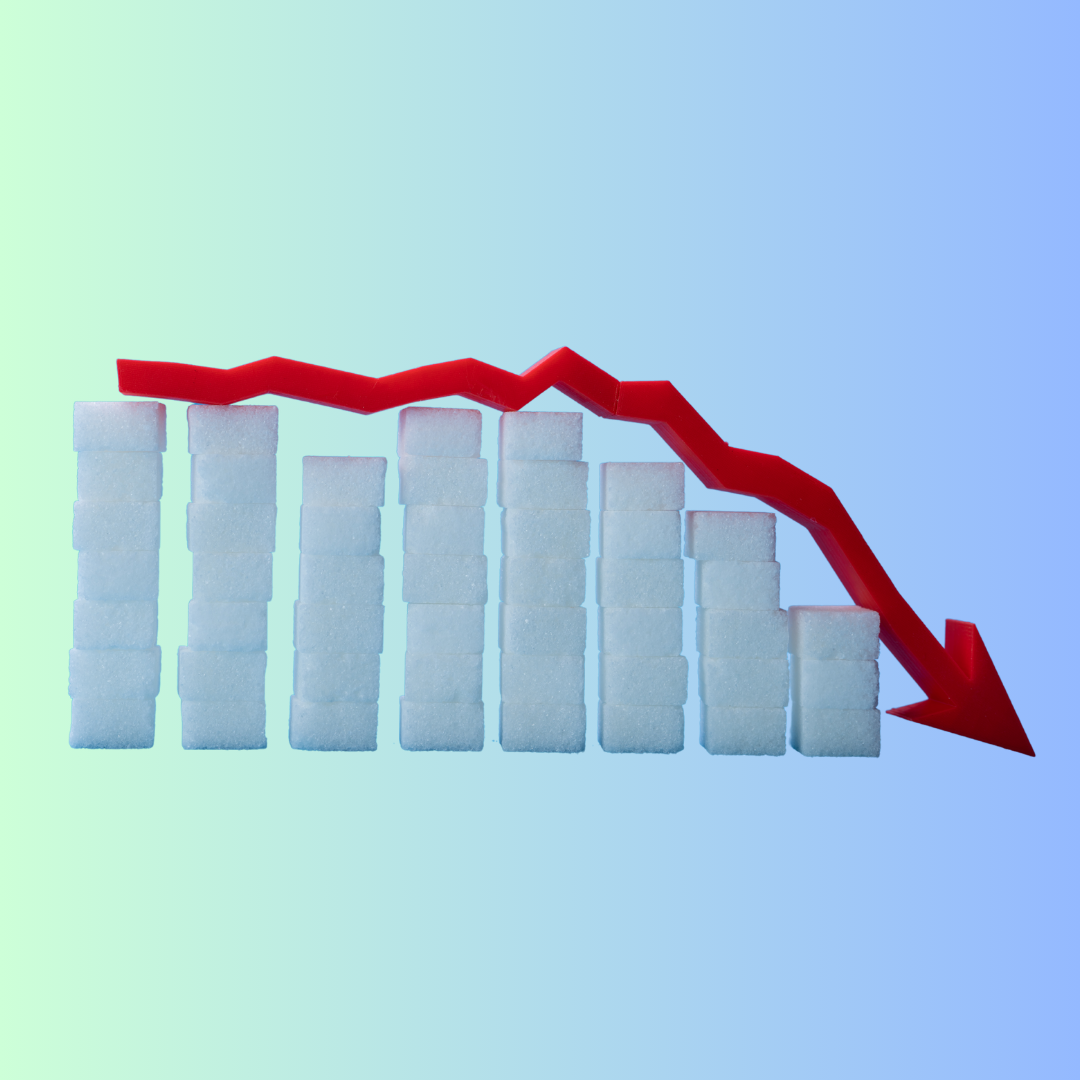
Stabilizes Blood Sugar – Prevents the spikes and crashes that trigger cravings.
Supports Muscle Repair and Growth – Muscle tissue burns more calories at rest than fat tissue.
Reduces Late-Night Hunger – Adequate protein throughout the day reduces evening snacking.
Improves Insulin Sensitivity – Helps your body use glucose more efficiently.
Increases satiety – Research shows: High-protein diets (25-30% of calories from protein) significantly improve body composition, satiety, and metabolic rate compared to lower-protein diets.

Protein reduces insulin sensitivity

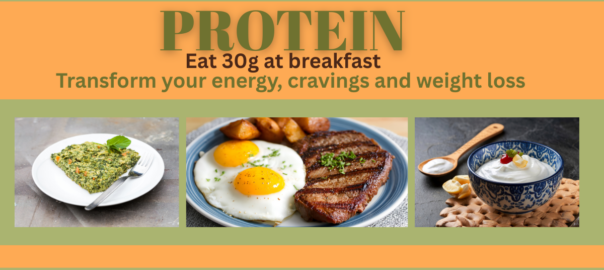
The Breakfast Protein Rule: 30g Minimum

Why? Because protein at breakfast:

→ Stabilizes blood sugar for the ENTIRE day
→ Reduces cravings and hunger later
→ Kickstarts your metabolism
→ Prevents muscle breakdown
→ Sets you up for better food choices all day

Research shows: A high-protein breakfast (30g+) improves satiety, reduces daily calorie intake, and helps maintain muscle mass during weight loss.

Compare These Breakfasts

Breakfast A: Toast with jam, orange juice
(5g protein, high sugar, blood sugar spike → crash → cravings by 10am)

Breakfast B: 3-egg veggie omelet with cheese and avocado
(30g protein, stable blood sugar, satisfied until lunch)

Which one sets you up for success?

How Much Protein Do You Actually Need?

The general recommendation for metabolic health and body composition is: 1.2g – 2.0g of protein per kilogram of body weight per day.

For a 70kg (154 lb) woman, that’s:

  • Minimum: 84g per day
  • Optimal: 100-140g per day

Spread across 3 meals, that’s roughly:

  • Breakfast: 30g
  • Lunch: 30g
  • Dinner: 40g

Research shows: Higher protein intakes (1.6-2.0 g/kg/day) combined with resistance training optimize muscle mass preservation and fat loss.

Easy Ways to Hit Your Protein Targets

protein target to hit

Breakfast (30g):

  • 3 eggs + 1 cup Greek yogurt
  • Protein smoothie: 1 scoop protein powder + 1 cup milk + 2 Tbsp nut butter
  • 2 eggs + 100g smoked salmon + avocado
  • Cottage cheese (1 cup) + berries + nuts

Lunch (30g):

  • Chicken breast (100g = 31g protein)
  • Tuna salad (1 can = 25g protein) + chickpeas
  • Lentil soup (1.5 cups) + Greek yogurt
  • Turkey wrap with cheese

Dinner (40g):

  • Grilled fish (150g = 35g protein) + quinoa
  • Beef stir-fry (120g beef = 36g protein) + veggies
  • Chicken thighs (150g = 40g protein) + roasted vegetables
  • Tofu scramble (200g tofu = 32g protein) + beans

Snacks (if needed):

  • Hard-boiled eggs (6g each)
  • Greek yogurt (15-20g per cup)
  • Protein shake (20-30g)
  • Nuts and cheese (10-15g)

Plant-Based? You Can Still Hit Your Targets

High-protein plant foods:

  • Lentils (18g per cooked cup)
  • Chickpeas (15g per cooked cup)
  • Tofu (20g per cup)
  • Tempeh (31g per cup)
  • Edamame (17g per cup)
  • Quinoa (8g per cooked cup)
  • Hemp seeds (10g per 3 Tbsp)
  • Nutritional yeast (8g per 2 Tbsp)
  • Plant-based protein powder (20-25g per scoop)

Tip: Combine plant proteins throughout the day to ensure you get all essential amino acids.

Your Challenge This Week

Pick ONE protein goal:

Option 1: The 30g Breakfast Challenge

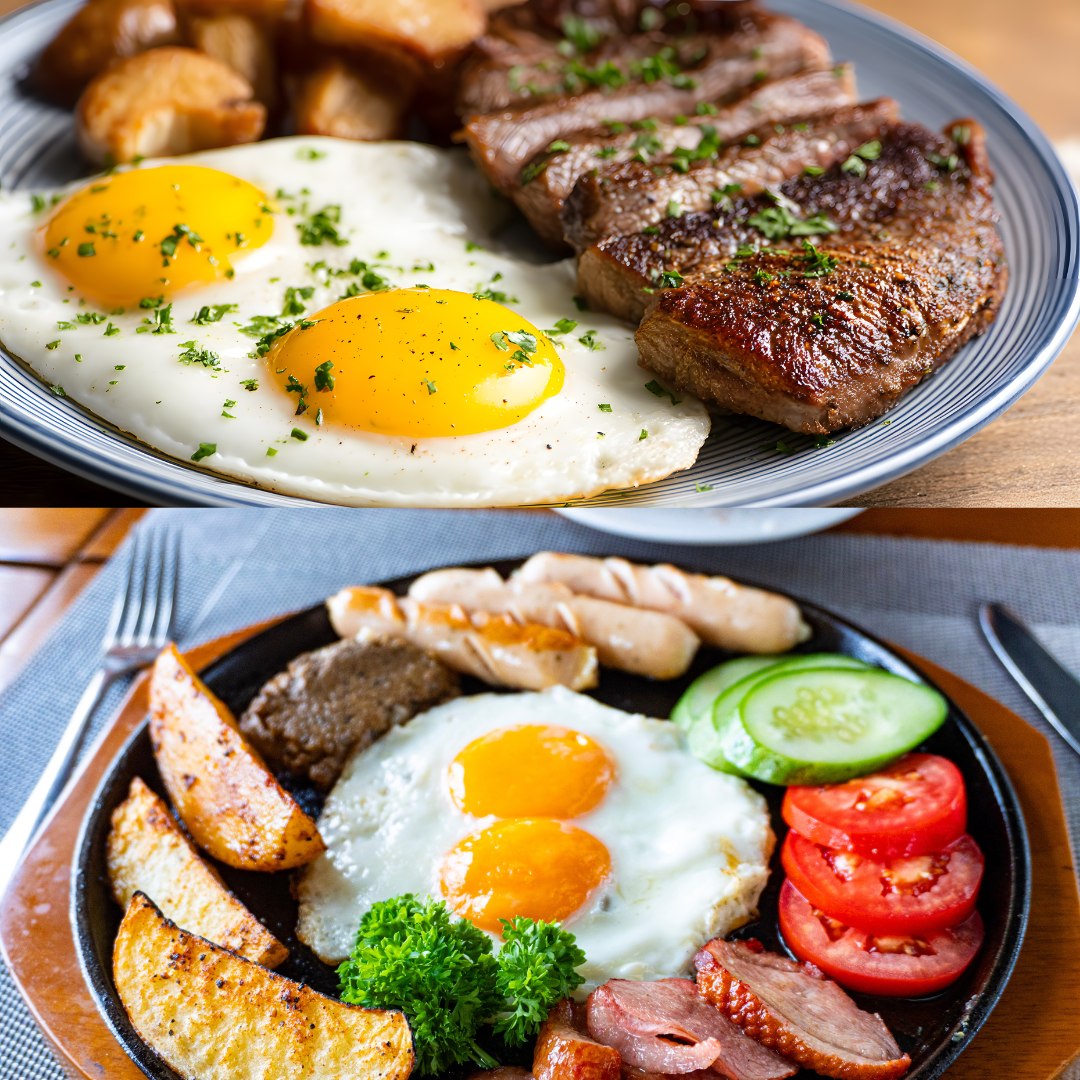
Eat at least 30g of protein within 1 hour of waking up. Track how you feel throughout the day.

high protein breakfast of eggs and meat

Option 2: Track Your Daily Protein

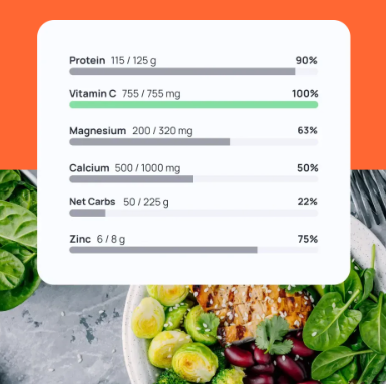
Use an app (like MyFitnessPal or Cronometer) to track your protein for 3 days. Are you hitting 100g+?

Track your protein intake with an app

Option 3: Pre-Prep Your Protein

Batch cook protein for the week:

  • Grill chicken breasts
  • Hard-boil a dozen eggs
  • Cook a big pot of lentils
  • Portion out Greek yogurt

Make it EASY to hit your protein targets.

protein batch cooking

The Bottom Line

When you give your body the building blocks it needs (amino acids from protein), it stops screaming at you for quick energy (sugar and carbs).

Try it for one week and see what happens.


Check out these other posts in the Metabolic Health Series:
⭐ Blog 1 https://www.coachingwithsuzi.com/scale-weight-metabolic-health/
⭐ Blog 2 https://www.coachingwithsuzi.com/your-gut-microbiome-is-running-the-show-and-you-didnt-even-know-it/


References

  • Moon J et al Clinical Evidence and Mechanisms of High-Protein Diet-Induced Weight Loss. J Obes Metab Syndr. (2020)  PMID: 32699189
  • Leidy HJ, et al. (2015). The role of protein in weight loss and maintenance. AJCN. PMID: 25926512
  • Leidy HJ, et al. (2013). Beneficial effects of a higher-protein breakfast. Obesity. PMID: 23446906
  • Phillips SM, Van Loon LJC. (2011). Dietary protein for athletes. Journal of Sports Sciences. PMID: 22150425

About Coach Suzi
Weight Loss Coach, Counsellor, Hypnotherapist
Author of The Balanced Mind Diet micro book
Creator of Weight Freedom Mastery
Questions? Email Me: suzi@coachingwthsuzi.com
Let’s chat: Book a time in my online calendar to discuss your goals (30 minutes)

Test: GLP-1s - Yes or No

My Honest Take on GLP-1 Medications: No Judgement, Just Real Talk

Let me start by saying this: I don’t support diet culture. Diets don’t work. That’s the foundational premise of my micro book, The Balanced Mind Diet, and it’s what I teach in my Weight Freedom Mastery program.

I believe weight loss is more about the mental game than anything else. It’s about transforming your identity – seeing yourself as someone who maintains their ideal weight with ease and freedom, and then taking action as that person right now.

In my program, there are no strict dietary guidelines. Just a recommendation to eat whole, natural foods. We use a variety of tools and techniques to embed permanent changes that produce lasting weight loss.

And importantly – this program is strategic. It’s not about rapid weight loss.

For some people, the weight comes off quickly and easily. They love how natural it feels. For others, it takes longer. It depends on many factors: how much weight you have to lose, your hormones, your stress levels, your relationship with food.

You might experience:

  • Slower metabolism and increased fat retention
  • Muscle loss and worse body composition
  • Long-term rebounding with faster weight regain
  • No change to lifestyle or habitual behaviour patterns
  • Continuation of intense cravings with their cycle of shame and guilt.

If you want to keep your energy up, feel strong and fit, look toned, be as healthy as possible, and (most importantly) sustain your results – you can’t just focus on barely eating and watching the scale drop as fast as possible.

That’s doing yourself a huge disservice, both now and for years to come.

So where do GLP-1 medications fit into all of this?

GLP-1 MEDICATIONS WORK
(AND THAT’S A GOOD THING)

Let me be clear that I am providing my opinion here as a weight loss coach. I am not a medical practitioner or dietician, and I am in no way providing medical advice.

My first thought when I see someone using Ozempic, Wegovy, or another GLP-1 medication for weight loss?

It works. Generally. (I have had one Australian client who found it didn’t work for her.)

And for people who are morbidly obese and have tried everything without success, these medications can be life-changing.

Losing the weight gives you a whole new experience in life:

  • You look better
  • You have more energy
  • You can indulge in a whole new wardrobe
  • You enjoy the positive response from people around you

But more importantly, you gain metabolic health.

Metabolic health should be a high priority, because when it’s poor, it opens you up to a whole range of diseases:

  • Type 2 diabetes
  • Cardiovascular disease
  • Fatty liver disease
  • Sleep apnoea
  • Certain cancers

So yes, avoiding that trajectory is a very good idea.

WHAT ABOUT THE SIDE EFFECTS?

It varies from person to person, but side effects can include:

  • Nausea, vomiting, diarrhea, constipation
  • Potential muscle loss if not managed properly
  • Rare but serious risks like pancreatitis and thyroid issues

Here’s my perspective: In many cases, the risks associated with continuing to carry too much body fat are greater than the risks of taking GLP-1 medications under medical supervision.

And many of the issues people attribute to GLP-1s happen ANY time someone loses a significant amount of weight quickly – with or without medication.

Fast weight loss without a solid strategy leads to all the problems I mentioned earlier: hunger, low energy, muscle loss, and rebounding.

WHAT OTHER DOWNSIDES ARE THERE?

1. Many people gain weight back quickly after stopping the medication.

But again, that happens even without GLP-1s. When people go back to their old habits after losing weight (no matter how they lost it), the weight comes back. It’s the well-known yo-yo dieting cycle, and it wreaks havoc on your metabolism.

2. Relying exclusively on GLP-1s and making no other changes is a massive, common mistake.

No strength training. Not learning how to eat in a way that will sustain long-term results. Not dealing with behavior patterns or addressing cravings.

People do the same thing with extreme diets – thinking the tool will do all the work, rather than using the tool to build a better life.

THE BIGGEST DISADVANTAGE: WHAT HAPPENS WHEN YOU STOP

GLP-1 medications work by greatly reducing appetite. The desire to overeat disappears. Food becomes a non-issue.

Which is wonderful – until you stop taking the drug.

People describe it as “falling off a cliff.” The hunger and cravings come roaring back with a vengeance.

And since you haven’t made any lifestyle or behavioral changes, you’re right back to square one in the weight loss battle.

ONE ALTERNATIVE: STAY ON THE MEDICATION LONG-TERM

We don’t know a lot yet about the long-term effects of GLP-1 medications. But here’s what we do know:
👉 In Australia, GLP-1s are expensive. In the US Trump RX will enable consumers to purchase at discounted prices.
👉 It is likely the drugs will become less stigmatized, cheaper, and more effective over time.
👉 I wouldn’t be surprised if a large percentage of people are on at least a low dose of a GLP-1 in the next 3-5 years. Maybe slightly longer.

And honestly? I understand what motivates that. As long as people are also doing the deeper work – building strength, eating quality food, and addressing the mental and emotional patterns that drove the weight gain in the first place.

WHAT SHOULD WE FOCUS ON?

As more and more people take these medications, I believe we’ll shift our focus to:

1. Food quality, not just quantity

Since GLP-1s help people manage calories more easily, we can prioritize what we eat – nutrient density, whole foods, gut health – not just how little we can get away with eating.

2. Muscle retention and body composition

Not just losing weight as quickly as possible, but building and maintaining muscle, looking toned and strong, and supporting long-term metabolic health.

3. Sustainable habits and long-term health

Creating a lifestyle you can maintain for decades, not just until you hit a goal weight.

WEIGHT FREEDOM MASTERY IS THE PERFECT COMPLEMENT TO GLP-1s

My Weight Freedom Mastery program is designed to help you:

✅ Make sustainable lifestyle changes while the medication manages your appetite
✅ Do the deeper mental work that addresses why you overeat, emotionally eat, or struggle with food in the first place
✅ Transform your identity so that when you stop the medication (or continue on a maintenance dose), you don’t experience that “falling off a cliff” feeling

If you still see yourself as “someone who struggles with weight,” you’ll keep struggling – medication or not.

But if you use this window (while your appetite is suppressed) to rewire your brain, shift your identity, and build new habits, you set yourself up for permanent, effortless weight maintenance.

MY CORE BELIEF: NO SHAME, NO JUDGEMENT

One of the core mantras in Weight Freedom Mastery is this: There should be no shame. You don’t deserve it, and it doesn’t serve you.

I advocate for self-autonomy and authority over your own life. You know yourself best.

So if your decision in partnership with your doctor is to use GLP-1 medications, you’ll find no judgement here.

I’ll rejoice with you when you achieve your goal and improve your metabolic health.

And I’d love to help you make the changes that ensure you become the kind of person who maintains their ideal weight with ease and freedom – for life.

The sooner you start that journey, the better.

If you begin while you’re taking the medication, there will be no falling off a cliff when you stop. Or if you decide to continue with a long-term dose, you can use your gains to advantage by taking care of your metabolic health and building a great foundation for continued success.

QUESTIONS or COMMENTS?

If you have an experience with GLP-1s you’d like to share, I’d love to hear about it. If there’s something I didn’t address here, I’m happy to answer any questions – just email me at suzi@coachingwithsuzi.com.

Ready to Make Your Weight Loss Permanent?

Whether you’re using GLP-1 medications or not, the mental game is what makes weight loss last.

If you’re ready to stop thinking about food 24/7, end emotional eating, and finally maintain your ideal weight with ease and freedom – let’s talk. 😊

Book time for a free chat – here’s my calendar

Learn More About Weight Freedom Mastery


About Coach Suzi

Suzi Jenner is a weight loss coach, qualified counsellor and hypnotherapist and author of The Balanced Mind Diet. She specializes in helping women over 40 break free from food obsession and achieve lasting weight loss through identity transformation. Her Weight Freedom Mastery program focuses on the mental game of weight loss – no diets, no shame, just sustainable freedom. 📧 suzi@coachingwithsuzi.com