Tag Archives: metabolic health

Protein - eat 30 g at breakfast to transform your energy, cravings and weight loss

The Protein Power Play: Why Your Metabolism Needs More Than You Think

Quick question: How much protein did you eat at breakfast this morning?

If your answer is “I don’t know” or “Not much” or “Just toast and coffee,” you’re about to discover why your metabolism has been struggling.

And when you don’t eat enough of it – especially at breakfast – you’re leaving the EASIEST metabolic advantage on the table.

The Thermic Effect of Food (TEF)

But here’s the thing: Not all foods create the same thermic effect.

  • Protein: 20-30% TEF (you burn 20-30 calories for every 100 calories of protein you eat)
  • Carbohydrates: 5-10% TEF
  • Fats: 0-3% TEF

Research shows: Protein requires significantly more energy to digest than carbs or fats, making it the most thermogenic macronutrient.

Translation: Eating protein literally burns more calories during digestion.

It’s like getting a metabolic boost just from choosing chicken instead of crackers.

But Protein Does Way More Than Just Burn Calories

Here’s why protein is non-negotiable for metabolic health:

Preserves Muscle Mass During Weight Loss – Without enough protein, you lose muscle along with fat (which slows your metabolism).
Increases satiety – Protein keeps you full longer, reducing cravings and overeating.
Stabilizes Blood Sugar – Prevents the spikes and crashes that trigger cravings.
Supports Muscle Repair and Growth – Muscle tissue burns more calories at rest than fat tissue.
Reduces Late-Night Hunger – Adequate protein throughout the day reduces evening snacking.
Improves Insulin Sensitivity – Helps your body use glucose more efficiently.
Increases satiety – Research shows: High-protein diets (25-30% of calories from protein) significantly improve body composition, satiety, and metabolic rate compared to lower-protein diets.
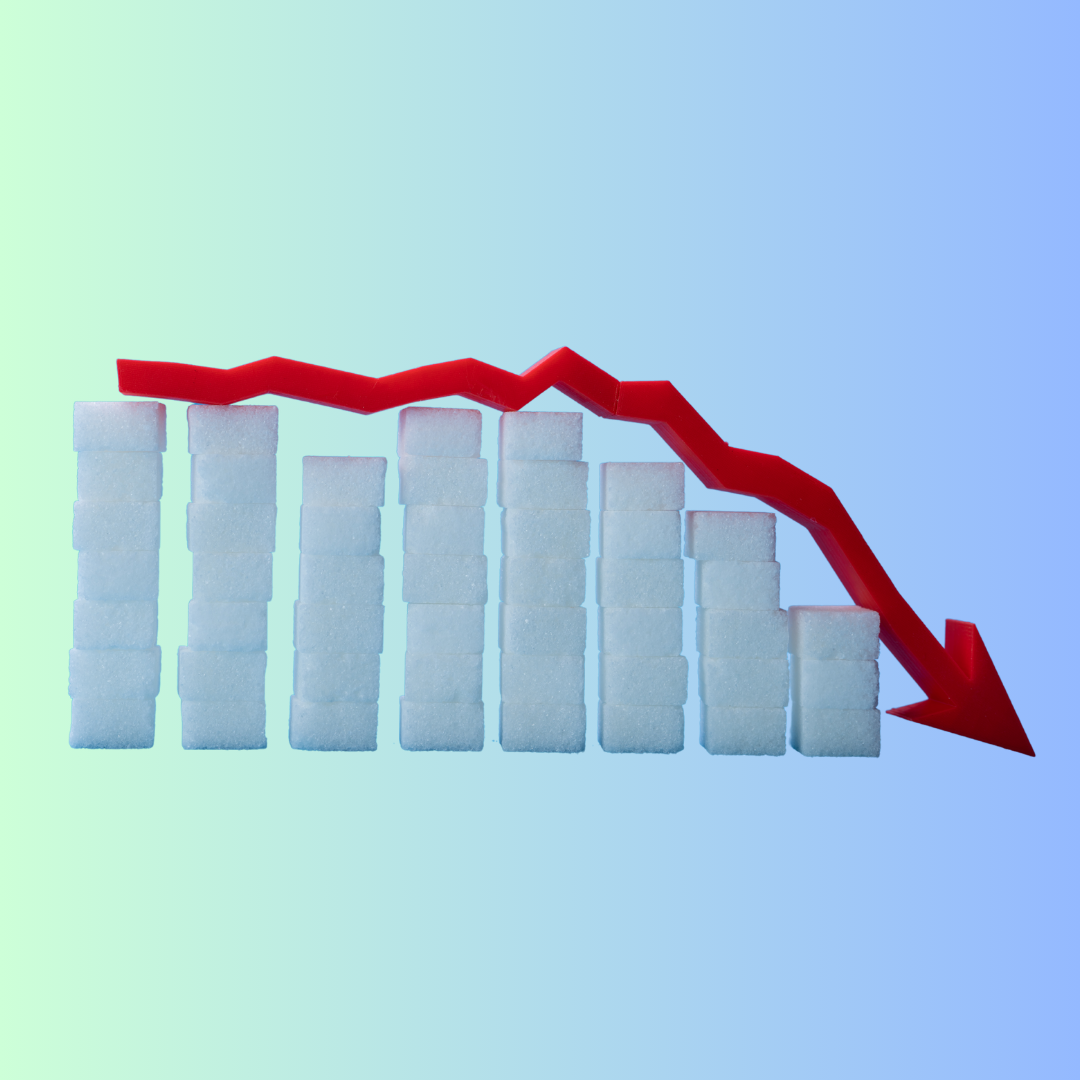
Protein reduces insulin sensitivity

The Breakfast Protein Rule: 30g Minimum

Why? Because protein at breakfast:

→ Stabilizes blood sugar for the ENTIRE day
→ Reduces cravings and hunger later
→ Kickstarts your metabolism
→ Prevents muscle breakdown
→ Sets you up for better food choices all day

Research shows: A high-protein breakfast (30g+) improves satiety, reduces daily calorie intake, and helps maintain muscle mass during weight loss.

Compare These Breakfasts

Breakfast A: Toast with jam, orange juice
(5g protein, high sugar, blood sugar spike → crash → cravings by 10am)

Breakfast B: 3-egg veggie omelet with cheese and avocado
(30g protein, stable blood sugar, satisfied until lunch)

Which one sets you up for success?

How Much Protein Do You Actually Need?

The general recommendation for metabolic health and body composition is: 1.2g – 2.0g of protein per kilogram of body weight per day.

For a 70kg (154 lb) woman, that’s:

  • Minimum: 84g per day
  • Optimal: 100-140g per day

Spread across 3 meals, that’s roughly:

  • Breakfast: 30g
  • Lunch: 30g
  • Dinner: 40g

Research shows: Higher protein intakes (1.6-2.0 g/kg/day) combined with resistance training optimize muscle mass preservation and fat loss.

Easy Ways to Hit Your Protein Targets

protein target to hit

Breakfast (30g):

  • 3 eggs + 1 cup Greek yogurt
  • Protein smoothie: 1 scoop protein powder + 1 cup milk + 2 Tbsp nut butter
  • 2 eggs + 100g smoked salmon + avocado
  • Cottage cheese (1 cup) + berries + nuts

Lunch (30g):

  • Chicken breast (100g = 31g protein)
  • Tuna salad (1 can = 25g protein) + chickpeas
  • Lentil soup (1.5 cups) + Greek yogurt
  • Turkey wrap with cheese

Dinner (40g):

  • Grilled fish (150g = 35g protein) + quinoa
  • Beef stir-fry (120g beef = 36g protein) + veggies
  • Chicken thighs (150g = 40g protein) + roasted vegetables
  • Tofu scramble (200g tofu = 32g protein) + beans

Snacks (if needed):

  • Hard-boiled eggs (6g each)
  • Greek yogurt (15-20g per cup)
  • Protein shake (20-30g)
  • Nuts and cheese (10-15g)

Plant-Based? You Can Still Hit Your Targets

High-protein plant foods:

  • Lentils (18g per cooked cup)
  • Chickpeas (15g per cooked cup)
  • Tofu (20g per cup)
  • Tempeh (31g per cup)
  • Edamame (17g per cup)
  • Quinoa (8g per cooked cup)
  • Hemp seeds (10g per 3 Tbsp)
  • Nutritional yeast (8g per 2 Tbsp)
  • Plant-based protein powder (20-25g per scoop)

Tip: Combine plant proteins throughout the day to ensure you get all essential amino acids.

Your Challenge This Week

Pick ONE protein goal:

Option 1: The 30g Breakfast Challenge

Eat at least 30g of protein within 1 hour of waking up. Track how you feel throughout the day.

high protein breakfast of eggs and meat

Option 2: Track Your Daily Protein

Use an app (like MyFitnessPal or Cronometer) to track your protein for 3 days. Are you hitting 100g+?
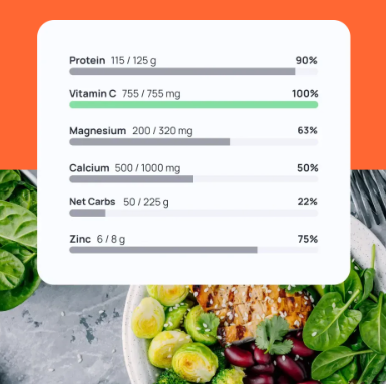
Track your protein intake with an app

Option 3: Pre-Prep Your Protein

Batch cook protein for the week:

  • Grill chicken breasts
  • Hard-boil a dozen eggs
  • Cook a big pot of lentils
  • Portion out Greek yogurt

Make it EASY to hit your protein targets.
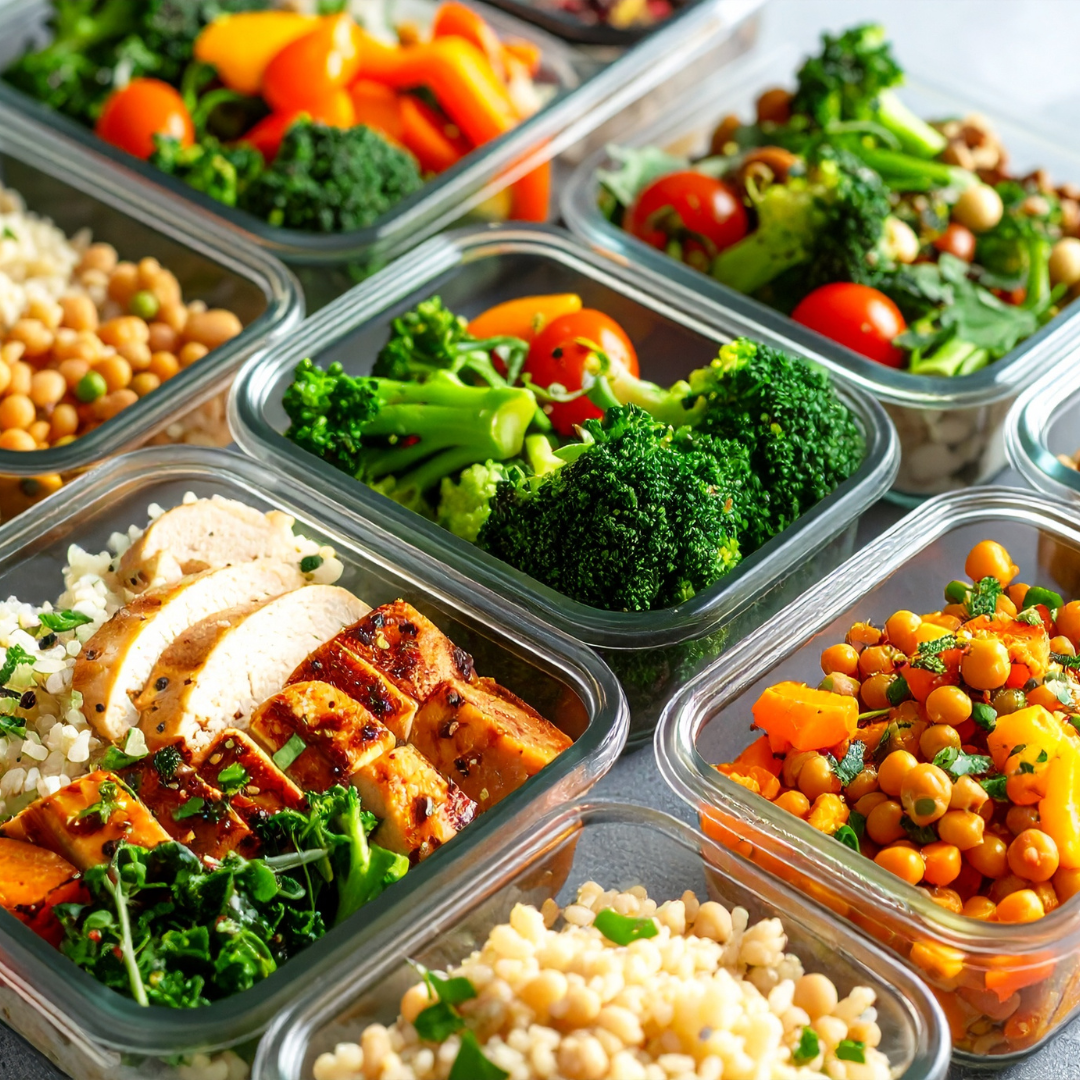
protein batch cooking

The Bottom Line

When you give your body the building blocks it needs (amino acids from protein), it stops screaming at you for quick energy (sugar and carbs).

Try it for one week and see what happens.


Check out these other posts in the Metabolic Health Series:
⭐ Blog 1 https://www.coachingwithsuzi.com/scale-weight-metabolic-health/
⭐ Blog 2 https://www.coachingwithsuzi.com/your-gut-microbiome-is-running-the-show-and-you-didnt-even-know-it/


References

  • Moon J et al Clinical Evidence and Mechanisms of High-Protein Diet-Induced Weight Loss. J Obes Metab Syndr. (2020)  PMID: 32699189
  • Leidy HJ, et al. (2015). The role of protein in weight loss and maintenance. AJCN. PMID: 25926512
  • Leidy HJ, et al. (2013). Beneficial effects of a higher-protein breakfast. Obesity. PMID: 23446906
  • Phillips SM, Van Loon LJC. (2011). Dietary protein for athletes. Journal of Sports Sciences. PMID: 22150425

About Coach Suzi
Weight Loss Coach, Counsellor, Hypnotherapist
Author of The Balanced Mind Diet micro book
Creator of the Weight Freedom Mastery Academy
Questions? Email Me: suzi@coachingwthsuzi.com
Let’s chat: Book a time in my online calendar to discuss your goals (30 minutes)
Test: GLP-1s - Yes or No

My Honest Take on GLP-1 Medications: No Judgement, Just Real Talk

Let me start by saying this: I don’t support diet culture. Diets don’t work. That’s the foundational premise of my micro book, The Balanced Mind Diet, and it’s what I teach in my Weight Freedom Mastery program.

I believe weight loss is more about the mental game than anything else. It’s about transforming your identity – seeing yourself as someone who maintains their ideal weight with ease and freedom, and then taking action as that person right now.

In my program, there are no strict dietary guidelines. Just a recommendation to eat whole, natural foods. We use a variety of tools and techniques to embed permanent changes that produce lasting weight loss.

And importantly – this program is strategic. It’s not about rapid weight loss.

For some people, the weight comes off quickly and easily. They love how natural it feels. For others, it takes longer. It depends on many factors: how much weight you have to lose, your hormones, your stress levels, your relationship with food.

You might experience:

  • Slower metabolism and increased fat retention
  • Muscle loss and worse body composition
  • Long-term rebounding with faster weight regain
  • No change to lifestyle or habitual behaviour patterns
  • Continuation of intense cravings with their cycle of shame and guilt.

If you want to keep your energy up, feel strong and fit, look toned, be as healthy as possible, and (most importantly) sustain your results – you can’t just focus on barely eating and watching the scale drop as fast as possible.

That’s doing yourself a huge disservice, both now and for years to come.

So where do GLP-1 medications fit into all of this?

GLP-1 MEDICATIONS WORK
(AND THAT’S A GOOD THING)

Let me be clear that I am providing my opinion here as a weight loss coach. I am not a medical practitioner or dietician, and I am in no way providing medical advice.

My first thought when I see someone using Ozempic, Wegovy, or another GLP-1 medication for weight loss?

It works. Generally. (I have had one Australian client who found it didn’t work for her.)

And for people who are morbidly obese and have tried everything without success, these medications can be life-changing.

Losing the weight gives you a whole new experience in life:

  • You look better
  • You have more energy
  • You can indulge in a whole new wardrobe
  • You enjoy the positive response from people around you

But more importantly, you gain metabolic health.

Metabolic health should be a high priority, because when it’s poor, it opens you up to a whole range of diseases:

  • Type 2 diabetes
  • Cardiovascular disease
  • Fatty liver disease
  • Sleep apnoea
  • Certain cancers

So yes, avoiding that trajectory is a very good idea.

WHAT ABOUT THE SIDE EFFECTS?

It varies from person to person, but side effects can include:

  • Nausea, vomiting, diarrhea, constipation
  • Potential muscle loss if not managed properly
  • Rare but serious risks like pancreatitis and thyroid issues

Here’s my perspective: In many cases, the risks associated with continuing to carry too much body fat are greater than the risks of taking GLP-1 medications under medical supervision.

And many of the issues people attribute to GLP-1s happen ANY time someone loses a significant amount of weight quickly – with or without medication.

Fast weight loss without a solid strategy leads to all the problems I mentioned earlier: hunger, low energy, muscle loss, and rebounding.

WHAT OTHER DOWNSIDES ARE THERE?

1. Many people gain weight back quickly after stopping the medication.

But again, that happens even without GLP-1s. When people go back to their old habits after losing weight (no matter how they lost it), the weight comes back. It’s the well-known yo-yo dieting cycle, and it wreaks havoc on your metabolism.

2. Relying exclusively on GLP-1s and making no other changes is a massive, common mistake.

No strength training. Not learning how to eat in a way that will sustain long-term results. Not dealing with behavior patterns or addressing cravings.

People do the same thing with extreme diets – thinking the tool will do all the work, rather than using the tool to build a better life.

THE BIGGEST DISADVANTAGE: WHAT HAPPENS WHEN YOU STOP

GLP-1 medications work by greatly reducing appetite. The desire to overeat disappears. Food becomes a non-issue.

Which is wonderful – until you stop taking the drug.

People describe it as “falling off a cliff.” The hunger and cravings come roaring back with a vengeance.

And since you haven’t made any lifestyle or behavioral changes, you’re right back to square one in the weight loss battle.

ONE ALTERNATIVE: STAY ON THE MEDICATION LONG-TERM

We don’t know a lot yet about the long-term effects of GLP-1 medications. But here’s what we do know:
👉 In Australia, GLP-1s are expensive. In the US Trump RX will enable consumers to purchase at discounted prices.
👉 It is likely the drugs will become less stigmatized, cheaper, and more effective over time.
👉 I wouldn’t be surprised if a large percentage of people are on at least a low dose of a GLP-1 in the next 3-5 years. Maybe slightly longer.

And honestly? I understand what motivates that. As long as people are also doing the deeper work – building strength, eating quality food, and addressing the mental and emotional patterns that drove the weight gain in the first place.

WHAT SHOULD WE FOCUS ON?

As more and more people take these medications, I believe we’ll shift our focus to:

1. Food quality, not just quantity

Since GLP-1s help people manage calories more easily, we can prioritize what we eat – nutrient density, whole foods, gut health – not just how little we can get away with eating.

2. Muscle retention and body composition

Not just losing weight as quickly as possible, but building and maintaining muscle, looking toned and strong, and supporting long-term metabolic health.

3. Sustainable habits and long-term health

Creating a lifestyle you can maintain for decades, not just until you hit a goal weight.

WEIGHT FREEDOM MASTERY IS THE PERFECT COMPLEMENT TO GLP-1s

My Weight Freedom Mastery program is designed to help you:

✅ Make sustainable lifestyle changes while the medication manages your appetite
✅ Do the deeper mental work that addresses why you overeat, emotionally eat, or struggle with food in the first place
✅ Transform your identity so that when you stop the medication (or continue on a maintenance dose), you don’t experience that “falling off a cliff” feeling

If you still see yourself as “someone who struggles with weight,” you’ll keep struggling – medication or not.

But if you use this window (while your appetite is suppressed) to rewire your brain, shift your identity, and build new habits, you set yourself up for permanent, effortless weight maintenance.

MY CORE BELIEF: NO SHAME, NO JUDGEMENT

One of the core mantras in Weight Freedom Mastery is this: There should be no shame. You don’t deserve it, and it doesn’t serve you.

I advocate for self-autonomy and authority over your own life. You know yourself best.

So if your decision in partnership with your doctor is to use GLP-1 medications, you’ll find no judgement here.

I’ll rejoice with you when you achieve your goal and improve your metabolic health.

And I’d love to help you make the changes that ensure you become the kind of person who maintains their ideal weight with ease and freedom – for life.

The sooner you start that journey, the better.

If you begin while you’re taking the medication, there will be no falling off a cliff when you stop. Or if you decide to continue with a long-term dose, you can use your gains to advantage by taking care of your metabolic health and building a great foundation for continued success.

QUESTIONS or COMMENTS?

If you have an experience with GLP-1s you’d like to share, I’d love to hear about it. If there’s something I didn’t address here, I’m happy to answer any questions – just email me at suzi@coachingwithsuzi.com.

Ready to Make Your Weight Loss Permanent?

Whether you’re using GLP-1 medications or not, the mental game is what makes weight loss last.

If you’re ready to stop thinking about food 24/7, end emotional eating, and finally maintain your ideal weight with ease and freedom – let’s talk. 😊

Book time for a free chat – here’s my calendar

Learn More About Weight Freedom Mastery


About Coach Suzi

Suzi Jenner is a weight loss coach, qualified counsellor and hypnotherapist and author of The Balanced Mind Diet. She specializes in helping women over 40 break free from food obsession and achieve lasting weight loss through identity transformation. Her Weight Freedom Mastery program focuses on the mental game of weight loss – no diets, no shame, just sustainable freedom. 📧 suzi@coachingwithsuzi.com

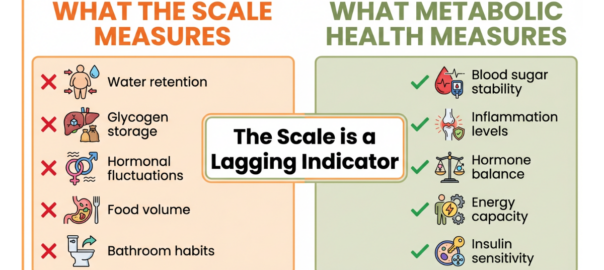
What the scale measures vs what metabolic health measures

The Number on the Scale is Lying to You

Why metabolic health is more important than scale weight

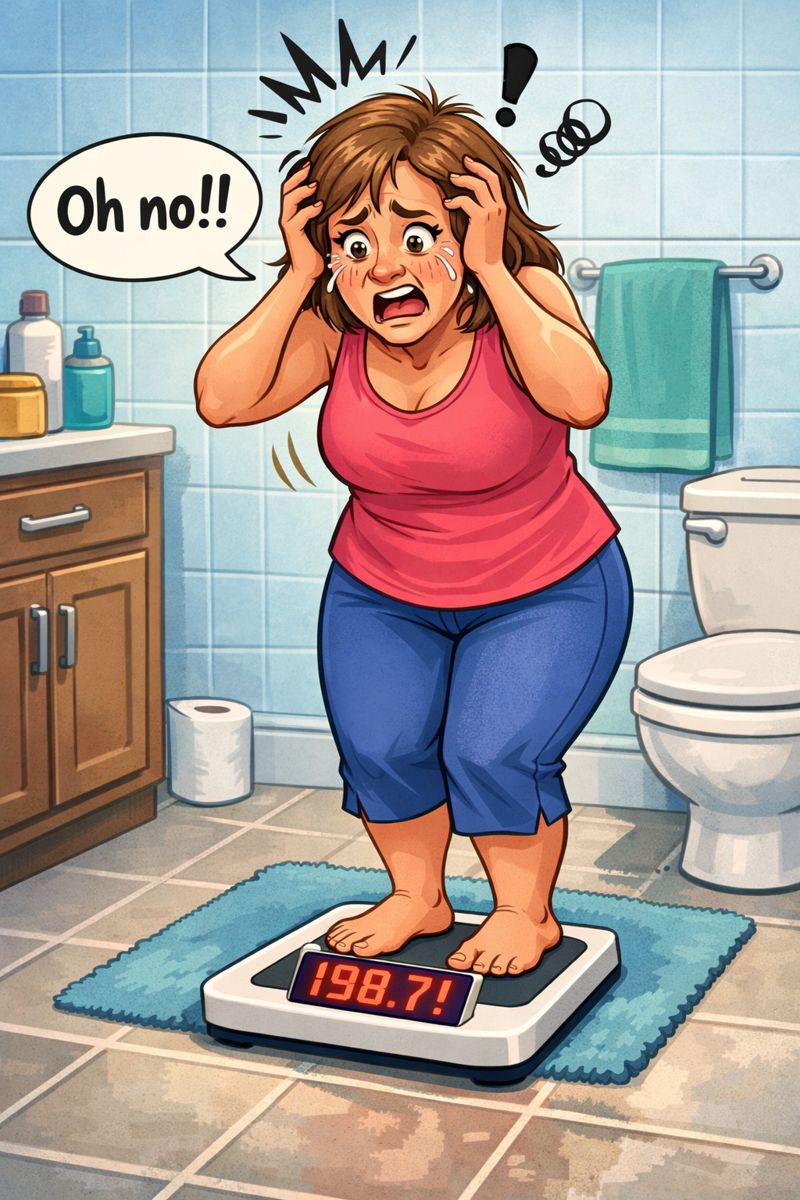
The scale went up. Again.

And if you’re like most women, that number instantly ruined your morning. Maybe it derailed your whole day. Maybe you skipped breakfast as punishment. Maybe you told yourself, “Clearly nothing is working.”

But here’s the thing: That number on the scale is lying to you.

What does the Scale Actually Measure?

  • How much water you’re retaining (hello, hormones and salt)
  • Whether you’ve had a bowel movement yet today
  • How much glycogen is stored in your muscles (which is actually a GOOD thing)
  • What you ate yesterday (not whether it was healthy or not)
  • Where you are in your menstrual cycle

What DOESN’T the scale measure?

  • Whether your blood sugar is stable
  • Whether your inflammation is decreasing
  • Whether your cells are burning fat efficiently
  • Whether your liver is functioning better
  • Whether your hormones are balanced
  • Whether your metabolic health is improving

The scale is not providing the whole picture. You can be getting metabolically HEALTHIER while the scale stays the same (or even goes up).

The scale is a lagging indicator. Metabolic health improvements happen FIRST. Weight loss follows. Not the other way around.

And if you ask me? Metabolic health needs to be the focus. It is so important. It protects your long-term health and produces a healthy body weight.

What Is Metabolic Health?

Metabolic health is your body’s ability to:
✅ Maintain stable blood sugar without extreme highs and lows
✅ Burn fat efficiently for energy
✅ Keep inflammation low
✅ Balance hormones naturally
✅ Respond appropriately to insulin
✅ Support cardiovascular health

In other words: metabolic health is how well your body WORKS, not how much it weighs.

And here’s what the research shows: You can be “thin” and metabolically unhealthy. And you can be heavier and metabolically healthy. The scale can’t tell the difference.

The Real Markers That Matter

Instead of obsessing over the scale, here’s what to pay attention to:

☑️Energy Levels: Are you waking up feeling more refreshed? Do you have steady energy throughout the day instead of crashes?
☑️Sleep Quality: Are you falling asleep easier? Staying asleep longer?
☑️Mood Stability: Are you less irritable? Feeling more emotionally balanced?
☑️Food Cravings: Are they decreasing? Do you feel more in control around food?
☑️Hunger Signals: Can you go 4-5 hours between meals without feeling ravenous?
☑️Skin, Hair, Nails: Are they improving? This is a sign of better nutrient absorption and hormone balance.
☑️How Your Clothes Fit: Forget the number. How do your jeans feel?
☑️Strength and Endurance: Can you walk further? Carry heavier grocery bags? Get up from the floor more easily?

These are signs that your metabolic health is improving. And THAT is what leads to sustainable weight loss.

Why This Matters for Weight Loss

When you focus on metabolic health FIRST, weight loss becomes a natural byproduct – not a constant battle. Here’s why:

When your metabolism is healthy:

  • Your body burns fat efficiently (instead of storing it)
  • Your hunger hormones regulate naturally (so you’re not constantly hungry)
  • Your cravings decrease (because your cells are properly fuelled)
  • Your energy increases (so you naturally move more)
  • Your stress response improves (so cortisol isn’t triggering fat storage)

When you focus on the scale:

  • You do extreme things that damage your metabolism
  • You trigger stress hormones that make fat loss harder
  • You create a yo-yo cycle that confuses your body
  • You ignore the actual health improvements happening

You really want to have a healthy metabolism. Poor metabolic health puts you at risk for cardiovascular disease, type 2 diabetes, dementia, certain cancers, kidney disease, along with daily symptoms like low energy, brain fog and mood swings.

Excessive focus on the scale can cause undue stress, disappointment, shame, guilt, anxiety, depression and sadness – all of which is destructive. It can create a “feedback loop,” where the stress from negative emotions leads to emotional eating, causing further weight gain (!!).   

There is no way you want or deserve this negativity in your life. Here’s what I recommend.

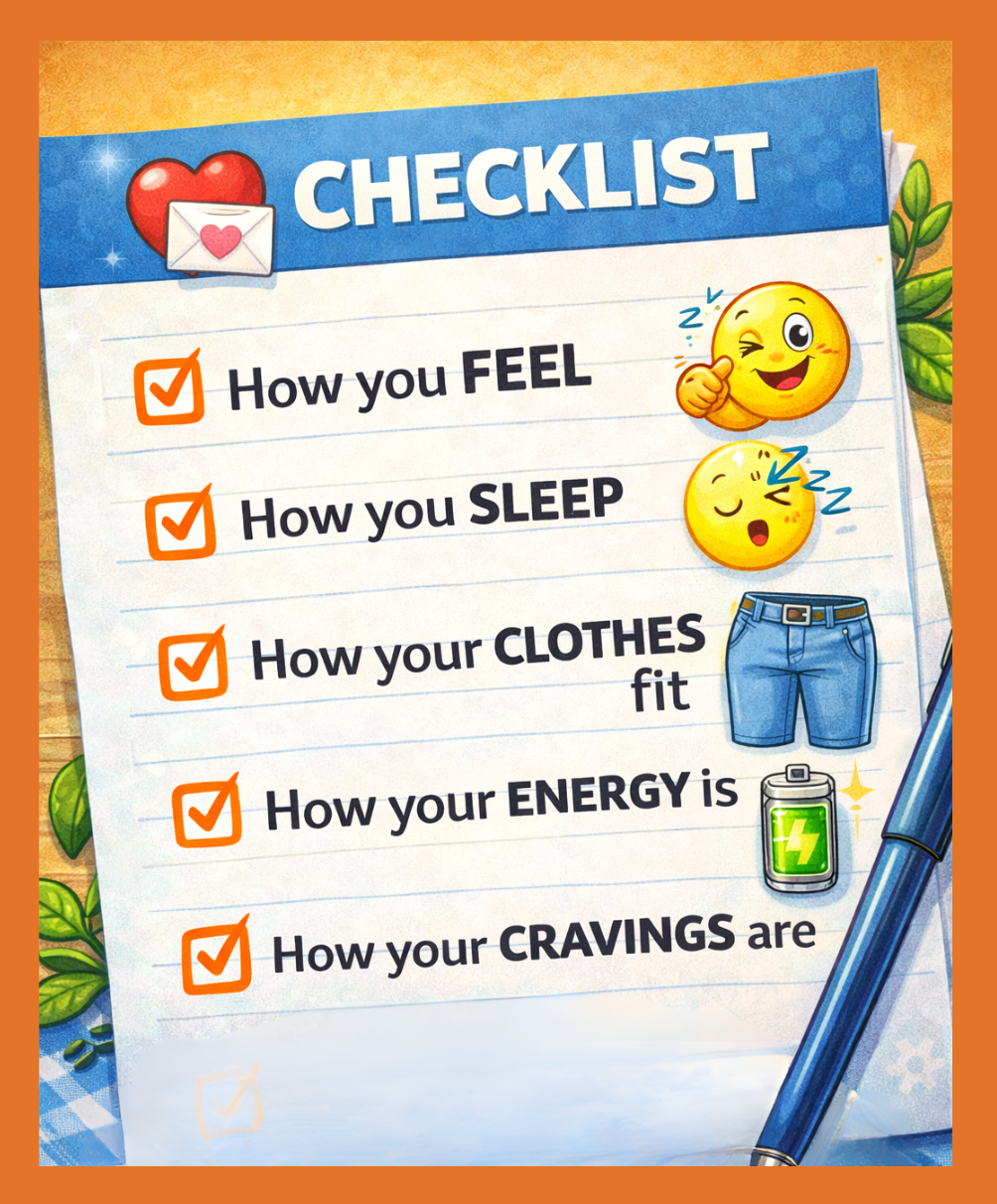
What to track

A checklist of the metabolic markers to track instead of weighing yourself

Stop weighing yourself daily. Seriously. Put the scale away for at least two weeks.

Instead, track:
💌 How you FEEL
💌 How you SLEEP
💌 How your CLOTHES fit
💌 How your ENERGY is
💌 How your CRAVINGS are

These are the real markers of progress. And when you focus on improving THESE things, the scale will eventually catch up.

Try This Experiment

If the scale has been messing with your head, here’s a little experiment:
⏩ Weigh yourself first thing in the morning.
⏩Then drink a big glass of water.
⏩Weigh yourself again.

You just “gained” half a pound in 30 seconds. That’s how meaningless those daily fluctuations are.

The Bottom Line

Focus on metabolic health. The rest will follow.

Your body is not a number. It’s a complex, beautiful system that deserves to be nourished, rested, and supported – not punished for what the scale says.

When you shift your focus from the scale to your actual health markers, everything changes.
🌺 Food noise quiets down.
🌺 Your body starts working for you.
🌺 And weight loss becomes a natural side effect – not a daily battle.


Coach Suzi
Coach, Counsellor, Hypnotherapist
Author of The Balanced Mind Diet
Creator of Weight Freedom Mastery
Book a time in my Calendar for a free 30 minute chat or Join my newsletter